

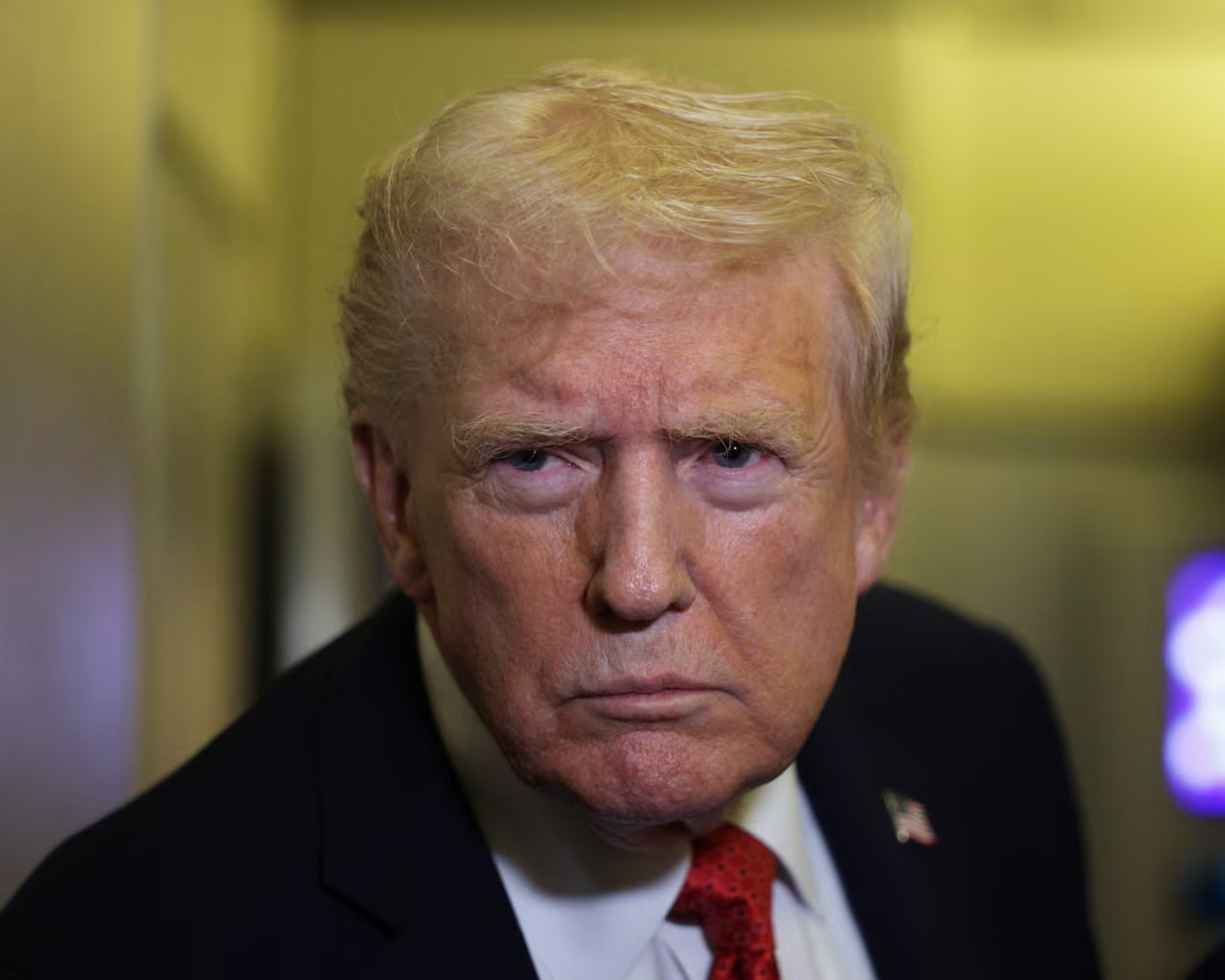
Donald Trump has escalated tensions with Colombia, one of the United States’ closest Latin American allies, by threatening new tariffs and cutting aid over alleged failures to curb drug production. The former president described Colombian President Gustavo Petro as “an illegal drug leader” and said Washington would act if Colombia did not address the issue.
Trump posted on Truth Social that Petro “better close up” drug operations “or the United States will close them up for him, and it won’t be done nicely.” He later reinforced the message in comments to reporters aboard Air Force One, calling Colombia “a drug-manufacturing machine” with “a lunatic” for a president. He said he would announce new tariffs on Monday.
The move is the latest in a string of aggressive statements by Trump targeting Latin America’s drug trade. The former president has also suggested that the US will reduce or eliminate assistance programs to Colombia, which have historically included funding for counternarcotics operations, infrastructure projects, and economic development.
Trump’s rhetoric comes amid ongoing US military operations against drug trafficking. On Sunday, US forces reportedly targeted another alleged drug-smuggling vessel off the Colombian coast. While details of the operation are limited, Trump framed it as part of a broader effort to confront what he sees as Petro’s failure to stop illegal drug production and trafficking.
Political analysts say the threats signal an aggressive approach toward allies that do not meet US expectations in the fight against narcotics. Colombia is one of the largest producers of cocaine in the world, and the US has long pressured the country to strengthen eradication and interdiction programs. However, Petro’s government has also pushed for alternative policies focused on social programs and economic reforms aimed at reducing the root causes of drug production.
Trump’s announcement could strain relations between Washington and Bogotá, as Colombia is traditionally considered one of the US’s most reliable partners in Latin America. Reducing aid could impact a range of programs, including counternarcotics funding, military cooperation, and economic development initiatives. Meanwhile, tariffs could affect trade in Colombian exports, potentially creating economic friction beyond drug-related issues.
The former president’s public criticism of Petro comes amid his broader campaign to project a tough-on-crime image. By labeling Petro an “illegal drug leader,” Trump reinforces his narrative of prioritizing security and law enforcement in the Western Hemisphere. This approach may resonate with domestic audiences in the US who are concerned about drug trafficking and border security.
Colombian officials have not yet responded directly to Trump’s latest comments. However, diplomatic channels are likely to be engaged to address the potential consequences of aid reductions and tariffs. Previous disagreements over drug policy between Washington and Bogotá have occasionally led to tension, but Trump’s rhetoric is sharper and more personal than usual, targeting the Colombian president by name and publicly questioning his competence.
Observers note that any implementation of tariffs or aid cuts would require action by the current US administration or Congress. While Trump can make public threats, the legal and procedural steps to impose trade measures or suspend aid involve multiple agencies and legislative oversight. Nonetheless, the announcement is likely to heighten uncertainty for Colombian policymakers and may impact ongoing counternarcotics initiatives.
Trump’s statement reflects broader US concerns over drug production and trafficking in the region, particularly the role of Colombian cocaine in international markets. The former president has repeatedly positioned himself as taking an uncompromising stance against illegal drugs, framing his actions as necessary to protect US citizens and uphold law and order.
As of Sunday evening, traders, diplomats, and political observers were analyzing the potential impact of Trump’s threat on Colombian exports, bilateral relations, and regional stability. Markets and governments in Latin America may closely monitor any follow-up announcements regarding tariffs or aid reductions, given the economic and political consequences such measures could have.
Trump’s latest comments underscore the continuing tension in US-Colombia relations, highlighting the intersection of trade, aid, and security policy. While the full effects remain uncertain, the rhetoric signals a willingness to escalate pressure on Colombia unless significant action is taken against drug production.
