

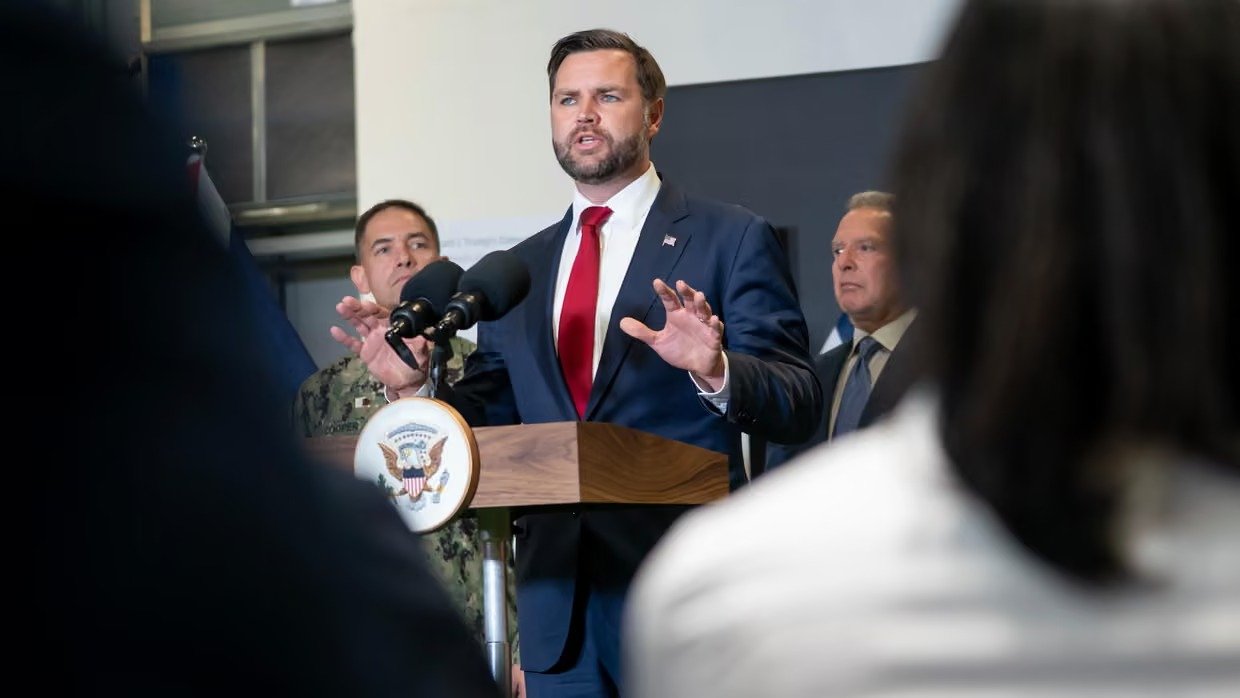
JD Vance, the US vice-president, expressed “great optimism” over the Gaza ceasefire plan during his visit to Israel on Tuesday. He described the agreement as “durable” and “going better than expected,” two days after Israeli airstrikes killed 26 Palestinians.
Vance’s visit is part of the Trump administration’s effort to strengthen the truce, while Hamas officials joined talks in Cairo to resolve remaining differences with Israel. “We are doing very well. Better than I expected. We are in a very good place. We’re going to have to keep working on it,” Vance said at a press conference in Kiryat Gat, southern Israel. Asked about the chances the ceasefire will hold, he said recent events give him “great optimism.”
Vance met US Middle East envoy Steve Witkoff and Jared Kushner, Trump’s son-in-law, on arrival. He was scheduled to meet Israeli Prime Minister Benjamin Netanyahu later Tuesday. The ceasefire has faced repeated violations since being implemented on 10 October, with Palestinian militants killing two Israeli soldiers and Israel conducting airstrikes in Gaza.
Kushner highlighted the complexity of the truce, noting that both sides are transitioning from intense warfare to a peacetime posture. Speaking at a civilian-military cooperation centre, he said other countries want to join the de-escalation effort. “Everyone believes it is possible to create something better in Gaza. I do believe a great outcome is possible,” he said.
The Palestinian news agency reported that Israel violated the ceasefire 80 times in the past 11 days, killing at least 80 Palestinians. Israel accused Hamas of delaying the return of hostages’ bodies, a violation of the agreement. Hamas has returned 15 bodies, including two received from the Red Cross on Tuesday night, but 13 more remain. The group said locating the bodies takes time, as many are buried under rubble.
A senior Israeli official said Vance’s visit aimed to advance the second phase of the 20-point US-drafted ceasefire plan, including disarming Hamas and forming a technocratic body to oversee Gaza. Vance warned that if Hamas does not comply with the deal, “very bad things are going to happen,” but he avoided giving a strict deadline.
Netanyahu met Egyptian intelligence chief Hassan Rashad in Jerusalem to discuss advancing the ceasefire. Egypt has played a key role as mediator and is expected to lead the Gaza stabilization force. In Cairo, exiled Hamas leader Khalil al-Hayya discussed disarmament and the technical committee’s formation. Hamas plans to nominate representatives, but Israeli agreement on their inclusion remains unclear.
Israel has stated that Gaza reconstruction will not begin until Hamas disarms, a point the group has opposed. Despite mutual accusations of ceasefire breaches, both sides reaffirmed commitment to the deal. Hayya said the Sharm el-Sheikh agreement represents an international determination that the Gaza war is over, and that Trump and others assured him fighting would end.
Qatar, a key mediator alongside Egypt, criticized Israel for repeated violations and West Bank settlement expansions, though it did not address Hamas’s Sunday attack on Israeli forces. Aid delivery to Gaza remains far below promised levels. Only 986 aid trucks have entered the strip since the ceasefire began, far short of the 6,600 expected.
The World Food Programme said under a third of its daily target is reaching Gaza. “Sustaining the ceasefire is vital; it’s the only way we can save lives and push back on famine in northern Gaza,” said WFP spokesperson Abeer Etefa in Geneva. Aid is supposed to flow through all five crossings, but key points, including Rafah with Egypt, remain closed due to the hostage dispute.
Palestinians continue to face danger crossing the “yellow line,” marking Israeli troop withdrawals. Civil defence officials report confusion on the ground. The Israeli military began marking the line with large yellow concrete blocks placed every 200 meters on Tuesday.
