

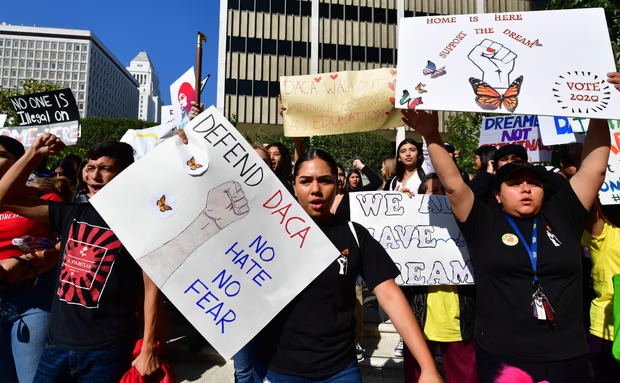
The Trump administration has once again shaken protections for Dreamers, undocumented immigrants brought to the US as children. The Deferred Action for Childhood Arrivals (Daca) program, created under Barack Obama, previously allowed recipients to live and work in the United States without fear of deportation.
The federal government is sending mixed signals about the program. In a recent court filing, officials indicated that initial Daca applications might resume after years of being paused, potentially allowing tens of thousands of people to have their petitions processed. At the same time, the Department of Homeland Security (DHS) stated that Daca recipients “are not automatically protected from deportations,” emphasizing that the program “does not confer any form of legal status in this country.”
This position has been used to justify the detention of about 20 known Daca recipients so far under the new administration, despite no official policy change. Juliana Macedo do Nascimento, spokesperson for immigrant youth group United We Dream, said ICE agents told detainees, “‘Oh, that doesn’t matter any more’” when they mentioned their Daca status.
Dreamers, estimated at nearly 2.5 million in the United States, are immigrants who came to the country as children and lack legal status. Daca recipients, a subset of Dreamers, number over 525,000 nationwide, mostly from Mexico, with large populations in California and Texas. These recipients are generally around 31 years old, and surveys show that more than 90% are employed or in school, benefiting from Daca protections to pursue education, work legally, and achieve economic independence.
Daca began on June 15, 2012, allowing eligible applicants to work legally and be considered “lawfully present” in the US. Applicants must have arrived before age 15, be under 31 at the time the program was announced, and meet other residency requirements. The program excludes those with felony convictions, significant misdemeanors, or multiple minor offenses. Although it does not provide legal status or a path to citizenship, Daca has been a critical lifeline for many young people.
Recent court rulings have added uncertainty. Earlier this year, the Fifth Circuit Court of Appeals ruled that Daca and work permit approvals should resume everywhere except Texas, citing the state’s claimed costs for education and healthcare. While the Trump administration suggested in court filings that it may restart initial Daca applications, it also reserved the right to make “future lawful changes” to the program. Advocates worry this could create false hope for applicants.
Dreamers in Texas face additional risks. While deportation protections may remain, some could lose work permits and “lawful presence” status, affecting their economic opportunities and future immigration options. Some recipients have already been detained. Evenezer Cortez Martínez, who arrived in the US at age four, was deported to Mexico in March despite having a valid Daca permit. He was later allowed to return to his family in Kansas City. Similarly, Paulo Cesar Gamez Lira was detained in front of his children in El Paso, Texas, after a minor marijuana conviction years ago.
These cases reflect a larger pattern of enforcement, with about 20 known Daca recipients arrested, detained, or deported this year. DHS officials have encouraged some recipients to consider voluntary deportation, but advocates warn this risks losing long-standing community members who contribute to American society. Diana Pliego, senior strategist at the National Immigration Law Center, said, “These are people who have built their lives here. This is their home. Losing them is a loss for the US.”
The changes to Daca protections under the Trump administration highlight the fragile status of Dreamers, leaving tens of thousands uncertain about their futures, work opportunities, and legal safety in the country they have called home for most of their lives.
