

Oregon is at the center of a major legal battle over the federal government’s authority to deploy state national guard troops. A federal judge in Portland said Friday she will soon issue a ruling on whether to block an order that could send 200 guard members into the city. The case has drawn nationwide attention for pitting state leaders against President Donald Trump’s use of emergency powers.
At the hearing, U.S. District Judge Karin Immergut said she plans to decide late Friday or Saturday. The case is being heard in the same downtown Portland courthouse that became a focal point of mass protests in 2020. Unlike those years, the area around the courthouse is currently calm.
Oregon officials argue that the deployment order is unlawful. They say Trump’s description of Portland as “war ravaged” is false. Attorney General Dan Rayfield said the order is not justified because it was not issued in response to an invasion, natural disaster, or widespread unrest. Instead, it followed a single protest involving a small group of activists outside a federal Immigration and Customs Enforcement (ICE) office.
The political background of the case has added attention. Judge Immergut, who now oversees the matter, was appointed to the federal bench by Trump during his first term. She was assigned just a day earlier, after another judge stepped aside. The earlier judge faced calls to recuse himself because his wife, Congresswoman Suzanne Bonamici, had publicly opposed the deployment.
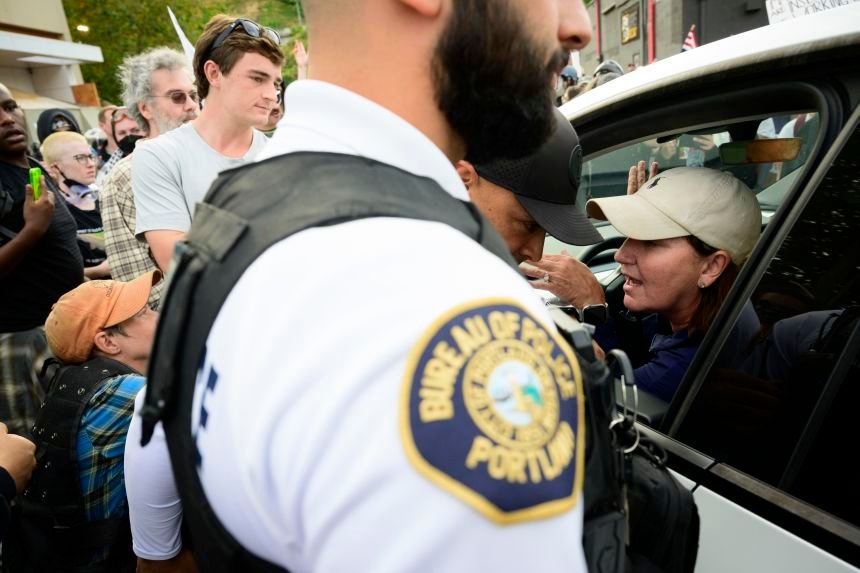
Evidence submitted by Oregon suggests that Portland protests were limited. Sergeant Andrew Braun of the Portland Police Bureau described in an email how three right-wing activists repeatedly provoked confrontations outside the ICE office. Braun identified Rhein Amacher, Chelly Bouferrache, and Katie Daviscourt as conservative influencers who antagonized protesters despite police warnings. Their repeated presence eventually led to clashes in which they were assaulted or pepper-sprayed. Braun noted they engaged in trespassing similar to the original protesters, but no broader unrest occurred.
State officials argue that this evidence shows federal intervention is unnecessary. They contend that sending the national guard could escalate tensions rather than reduce them. Portland’s district attorney, Nathan Vasquez, warned that deploying federal forces not trained in local policing could worsen the situation. He said their presence might trigger the very unrest they are meant to prevent.
The lawsuit, Oregon v. Trump, underscores the long-standing debate over state versus federal control of national guard units. Governors generally have authority over their state’s guard forces unless there is a large-scale emergency or foreign threat. Oregon officials claim Trump’s order ignores these legal limits and risks undermining community trust in law enforcement.
Supporters of the deployment argue the federal government has the right to intervene when public safety is at risk. They say protests targeting federal property, including ICE offices, justify federal involvement. Critics, however, see the move as politically motivated, portraying cities like Portland as unsafe.
The ruling by Judge Immergut could have far-reaching effects. If she blocks the deployment, it would affirm state sovereignty and set limits on federal authority over national guard units. If she allows it, the decision could expand federal claims of control in local security matters.
Portland residents now await clarity. The city, which experienced nightly unrest during 2020, has been largely peaceful in recent months. Whether federal troops return to Portland streets depends on the judge’s imminent decision.
