

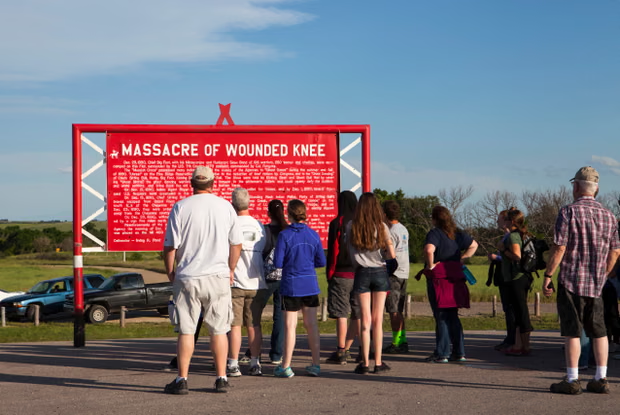
Defense Secretary Pete Hegseth announced that 20 US soldiers who took part in the 1890 Wounded Knee massacre will keep their Medals of Honor. The massacre killed about 250 Lakota Sioux, many of whom were unarmed women and children. Hegseth called the soldiers “brave” and said a review panel confirmed the awards were properly given. He added that the decision is final and their place in history is secure.
The massacre has long been debated over its description. While US records label it a “battle,” critics argue it was a massacre, as many Lakota had surrendered before being killed. The medal review was ordered in 2024 by former Defense Secretary Lloyd Austin after Congress called for it in the 2022 defense bill. Austin sought to ensure that no medals were awarded for acts inconsistent with the nation’s highest military honor.
Hegseth criticized his predecessor, claiming Austin prioritized political correctness over historical accuracy. It is unclear whether the review report will be made public. Democratic lawmakers had pushed to revoke the medals, especially through proposals like the Remove the Stain Act, arguing the awards honor acts of violence against Native Americans at the Pine Ridge Indian Reservation in South Dakota. Senator Elizabeth Warren said earlier this year, “We cannot be a country that celebrates and rewards horrifying acts of violence against Native people.”
After the massacre, 19 soldiers from the Seventh Cavalry received Medals of Honor for actions ranging from rescuing troops to efforts to dislodge Sioux hiding in a ravine. Native American communities have long sought revocation, seeing the site as a symbol of genocide and oppression. In 1990, Congress formally apologized to descendants of the victims, but no reparations were offered, and the medals remained. Many tribes continue to mourn the massacre as a tragic chapter in US history.
Thursday’s announcement follows a series of historical revisions by the Trump administration. Recent actions include restoring Confederate-linked military base names and monuments, and renaming a Navy ship that honored gay rights activist Harvey Milk. The administration also targeted cultural institutions, federal webpages, and museum exhibits it deemed “unpatriotic,” including topics on slavery, diversity, and discrimination. Some changes were later reversed, while grant funding to institutions honoring enslaved people was cut.
Historians and Native American leaders condemned the decision. Columbia University professor Karl Jacoby said on social media, “Only an administration intent on committing war crimes in the present and future would call Wounded Knee a ‘battle’ rather than what it truly was.” He added that history cannot be settled by government decree and that interpretations imposed by officials do not change historical facts. The decision keeps the Wounded Knee Medals of Honor intact, but debate over the massacre, historical memory, and Native American recognition continues to stir controversy nationwide.
