

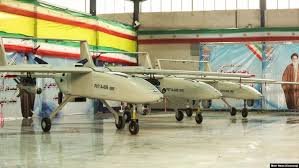
Venezuela is expanding its military cooperation with Iran by developing advanced drones that could challenge the United States in the Caribbean. Iranian experts are now building drones at Venezuelan air bases while training local military personnel to operate them. These include models like the Mohajer-6 and Shahed-131, which have proven effective in conflicts worldwide. With this project, Venezuela is becoming a key hub of drone technology in the region.
The main operations are at El Libertador Air Base in Maracay. Iranian specialists handle assembly and training while maintaining strict supervision. Even Venezuelan engineers must get approval before entering restricted areas, showing Iran’s tight control over the facility. Reports indicate that billions of dollars have been invested in the program, often under the cover of civilian projects such as bicycle or tractor factories. These fronts hide the real goal: building drones capable of countering U.S. military power.
The partnership between Venezuela and Iran began in 2006 with a defense agreement that opened the door to joint military projects. Venezuelan engineers trained in Iran returned to contribute to local production. In 2012, then-president Hugo Chávez announced that Venezuela was making its own drones, a statement that surprised the international community. Since then, the country has developed surveillance drones, armed drones, and even kamikaze models.
President Nicolás Maduro is preparing for potential conflict as tensions rise with the United States. Venezuela has about 340,000 active military members and is expanding its militia forces. Maduro has said the country will respond immediately if attacked, with drones expected to play a key role in defense. These unmanned systems provide a low-cost way to challenge a much stronger military opponent.
Venezuela is also backed by global allies. Iran remains the primary partner, while China and Russia provide political and strategic support. Maduro has publicly showcased gifts from Chinese President Xi Jinping as a symbol of friendship. Russian leaders have also expressed solidarity. If a conflict occurs, these allies could assist Venezuela with supplies or diplomatic support, further strengthening Maduro’s position.
The rise of Venezuela Iran drone cooperation is a major concern for the United States. American officials have long been wary of Iran’s influence in Latin America, and the new drone facilities in Venezuela heighten that threat. Iranian-made drones have already proved deadly in the Middle East and Ukraine, and their presence in the Caribbean signals a shift in regional power dynamics.
Venezuela continues to expand its drone program, relying on Iranian expertise, significant investment, and support from global allies. The country is building a capability designed to deter U.S. influence and assert its power in the Caribbean. As tensions grow, the drones could play a decisive role in shaping the region’s security landscape.
