

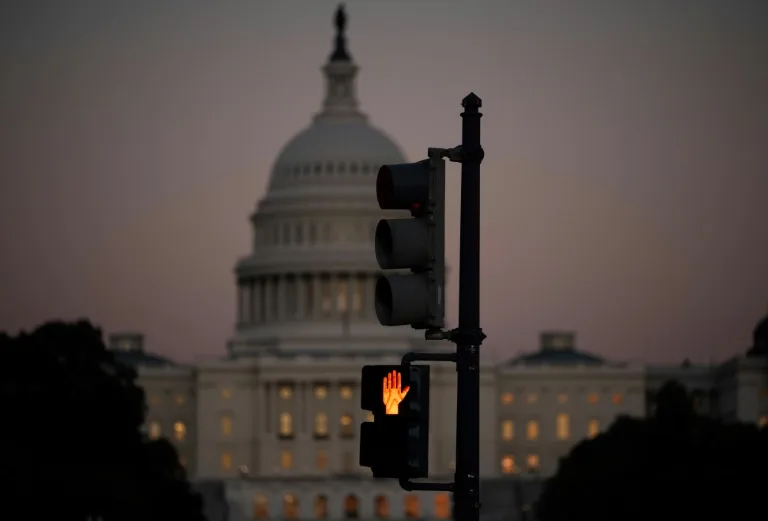
The United States is entering its second week of a government shutdown, with analysts warning the standoff between Democrats and Donald Trump’s Republicans could last for weeks. Political experts say deep partisan divisions have put compromise out of reach, raising concerns about prolonged disruption to federal agencies and services.
Andrew Koneschusky, a former press secretary for Senate Democratic leader Chuck Schumer, said, “It’s possible this shutdown drags on for weeks, not just days. Right now, both sides are dug in and there’s very little talk of compromise.”
At the core of the dispute is a Democratic demand to extend health care subsidies that are set to expire, which could sharply increase costs for millions of low-income Americans. Trump blamed minority Democrats for blocking his funding resolution, which requires a small number of their votes to pass.
“They’re causing it. We’re ready to go back,” Trump told reporters at the White House, appearing resigned to a prolonged shutdown. He added that his administration had begun permanently firing, not just furloughing, federal workers and blamed Democrats for “causing the loss of a lot of jobs.”
The current impasse contrasts with March, when Democrats backed a six-month Republican resolution to keep federal funding flowing despite policy objections. Schumer now faces pressure from his party’s base and potential primary challengers, making him reluctant to yield in the current standoff.
Senate Republicans are banking on Democrats giving in as they repeatedly force votes. Jeff Le, a former senior official in California politics, said, “I could see a temporary agreement coming from both parties by the end of October. Anything beyond two months would halt government operations seriously and potentially impact national and homeland security considerations, casting blame on both parties.”
Public sentiment may influence a resolution, analysts say, as polling shows mixed reactions but slightly more criticism directed at Republicans. The Trump administration’s hardline stance increases the likelihood that the shutdown could rival the 2018‑2019 record. During that period, federal agencies were closed for five weeks, costing the economy $11 billion in the short term, with $3 billion never recovered.
James Druckman, a politics professor at the University of Rochester, said Trump’s intransigence makes a quick compromise unlikely. “The Trump administration views itself as having an unchecked mandate and generally does not compromise,” he said. “Democrats, having been critiqued for not standing strongly enough in previous negotiations, are inclined to stand firm politically.”
US Treasury Secretary Scott Bessent has warned that the shutdown could negatively impact GDP growth. California-based financial analyst Michael Ashley Schulman suggested that economic pressures may eventually force compromise. “If Wall Street gets spooked and Treasury yields spike, even the most ideologically committed lawmakers may turn to bipartisan solutions,” he said.
Not all experts expect a long delay. Aaron Cutler, head of congressional oversight at global law firm Hogan Lovells and a former House staffer, predicts the shutdown could last as few as 12 days. “Senate Democrats will blink first. While the shutdown continues, congressional hearings are paused and federal work is slowed. That’s a win for many Democrats, but they won’t want the blame,” he explained.
The prolonged shutdown highlights the deep divisions in US politics, with partisan priorities overshadowing potential compromise. Analysts warn that extended gridlock could affect national security, economic stability, and essential federal services, further complicating an already tense political landscape.
