

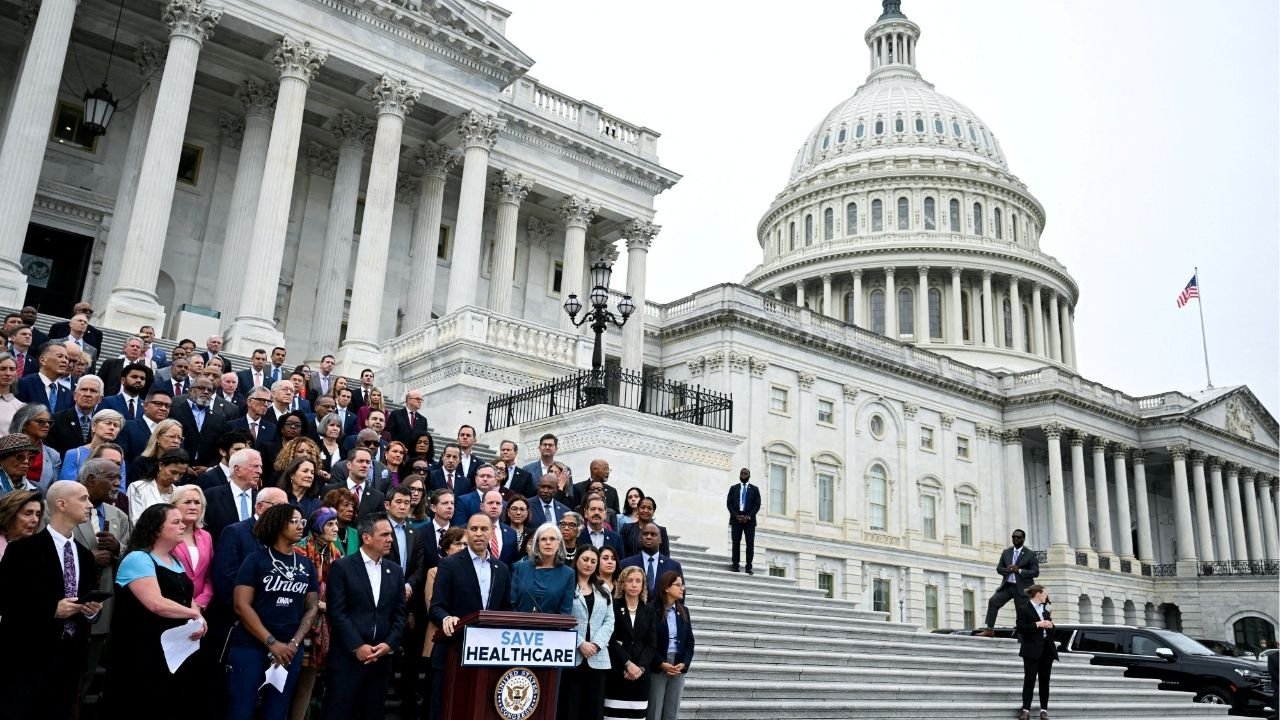
The United States government shut down on Wednesday after congressional Democrats refused to support a Republican plan to extend funding for federal departments. Democrats insisted on a series of concessions focused on healthcare before approving the measure. The failure to reach an agreement caused funding to lapse at midnight, marking the first government shutdown in nearly seven years. The last closure in December 2018 lasted 35 days during President Trump’s first term.
Republicans, who control both the House and Senate, rejected the Democrats’ demands. Efforts to prevent a funding lapse failed, even though the House had previously passed a bill to fund the government through November 21. The bill required 60 votes in the Senate, including Democratic support, which did not materialize. At the same time, Republicans blocked a Democratic proposal to maintain funding through October while implementing multiple policy changes.
Senate leaders sharply criticized the opposition party. Republican majority leader John Thune accused Democrats of putting partisan interests ahead of public needs, saying they were willing to sacrifice Americans’ priorities to force a confrontation with the president. Democrats countered, blaming the GOP for plunging the country into a shutdown and warning that the Republican bill threatened millions’ healthcare. Senate Democrat Chuck Schumer said Republicans were rejecting bipartisan talks and risking Americans’ health coverage.
The White House warned of mass federal layoffs if funding remained unavailable. President Trump said many federal employees would lose their jobs during the shutdown and added that “They’re going to be Democrats.” Shortly after the failed votes, Russ Vought, director of the Office of Management and Budget, sent a letter to federal agencies blaming Democrats’ policy demands for the shutdown and warning that its duration was unpredictable.
Democrats have demanded an extension of premium tax credits under the Affordable Care Act, which expire at the end of the year, a reversal of Republican cuts to Medicaid, protection for public media funding, and limits on the president’s ability to use rescissions to reduce foreign aid. Analysts estimate the total cost of these provisions at around $1 trillion. Without these measures, about 20 million people could face higher health insurance costs, while 10 million could lose coverage due to Medicaid and ACA changes.
Some Republican leaders expressed a willingness to negotiate on ACA credits, but they insisted that new government funding be approved first. The shutdown revealed divisions within the Democratic caucus. Three members broke ranks and voted for the Republican funding proposal, citing concerns about leaving federal agencies without funds. Democratic senator Catherine Cortez Masto said she could not support a costly shutdown that would harm families. Independent Angus King, who caucuses with Democrats, said he voted in favor because the shutdown paradoxically gave the president more power. Pennsylvania’s John Fetterman also supported the GOP bill, citing national interest over party allegiance.
Public opinion remains divided. A New York Times/Siena poll found that only 27% of Americans thought Democrats should shut down the government, while 65% opposed it. Among Democrats, 47% supported a shutdown. A Marist poll showed 38% of Americans would blame Republicans, 27% Democrats, and 31% both parties for the closure.
Republican senator Ted Cruz called the Democrats’ tactics a “temper tantrum” unlikely to succeed. He predicted the shutdown would end in capitulation, saying the lights would eventually be turned back on after the party vented its frustration. For now, federal agencies and millions of Americans face an uncertain period, with critical operations paused and healthcare coverage at risk as the US government shutdown of 2025 enters its first day.
