

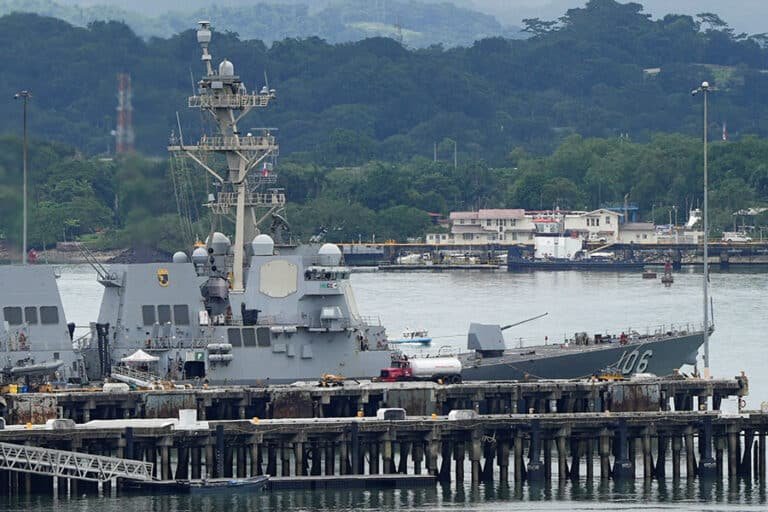
US forces carried out another strike against a vessel illegally carrying drugs off the coast of Venezuela, President Donald Trump announced during a speech at the US Navy’s 250th anniversary celebration. Speaking to thousands of sailors at Naval Station Norfolk in Virginia, Trump emphasized that the United States would also address drug trafficking occurring on land.
Trump delivered his remarks next to the Harry S Truman aircraft carrier. It was not immediately clear whether he was referencing a strike previously reported by Defense Secretary Pete Hegseth. Trump said the Navy had supported the mission “to blow the cartel terrorists the hell out of the water. There are no boats in the water anymore. You can’t find them.”
The administration has carried out multiple strikes in the Caribbean targeting fast boats linked to drug trafficking. Officials identified members of Tren de Aragua, a Venezuelan criminal group designated as a foreign terrorist organization, as primary targets. Hegseth previously reported that four people were killed in earlier operations against alleged drug vessels.
Trump warned that if smugglers avoided sea routes, authorities would shift focus to land trafficking. “We’ll have to start looking about the land because they’ll be forced to go by land. And let me tell you that’s not going to work out well for them either,” he said.
The United Nations has criticized the strikes, calling them extrajudicial killings. “International law does not allow governments to simply murder alleged drug traffickers,” the UN stated last month. It urged that criminal activities should be handled through proper investigation, prosecution, and international cooperation.
The Navy ceremony took place amid a federal government shutdown, leaving some military personnel working without pay. Trump accused Democrats of attempting to disrupt the celebration, posting on social media, “THE SHOW MUST GO ON! This will be the largest Celebration in the History of the Navy. Thousands of our brave Active Duty Servicemembers and Military Families will be in attendance, and I look forward to this special day with all of them.”
Trump also pledged to rebuild the Navy’s shipbuilding capacity, citing concerns about declining US naval dominance. The current fleet is the smallest since before World War II, while Chinese shipyards have surpassed US production.
Navy Secretary John Phelan confirmed in March that he ordered accelerated production of Columbia- and Virginia-class submarines, highlighting an urgent need for shipbuilding. The administration emphasized expanding military readiness to address global and domestic threats.
Recent Pentagon changes include Hegseth’s restructuring of top military leadership and new directives emphasizing warfighting readiness. In a controversial speech, Hegseth announced the end of “woke” culture in the military and introduced gender-neutral physical fitness standards. He stressed that the Department of War’s mission is focused entirely on preparing for and winning conflicts, ensuring peace through strength.
Trump also proposed using US cities as training grounds for the armed forces and warned of an “invasion from within,” calling for increased military preparedness to counter domestic and international threats.
The strikes off Venezuela and renewed focus on drug trafficking reflect an aggressive approach to countering narcotics networks. Analysts say continued operations at sea and on land could heighten tensions with international partners while showcasing US military resolve.
Observers note that the combination of overseas maritime strikes and potential domestic operations underscores a strategic pivot toward assertive military and anti-narcotics policies. These measures aim to disrupt criminal networks while reinforcing the administration’s broader goals of security, readiness, and deterrence.
Trump’s remarks and recent Pentagon directives signal a willingness to use decisive military action against threats to US interests. How these operations affect relations with Venezuela, other Caribbean nations, and international law remains closely watched by analysts and foreign governments.
