

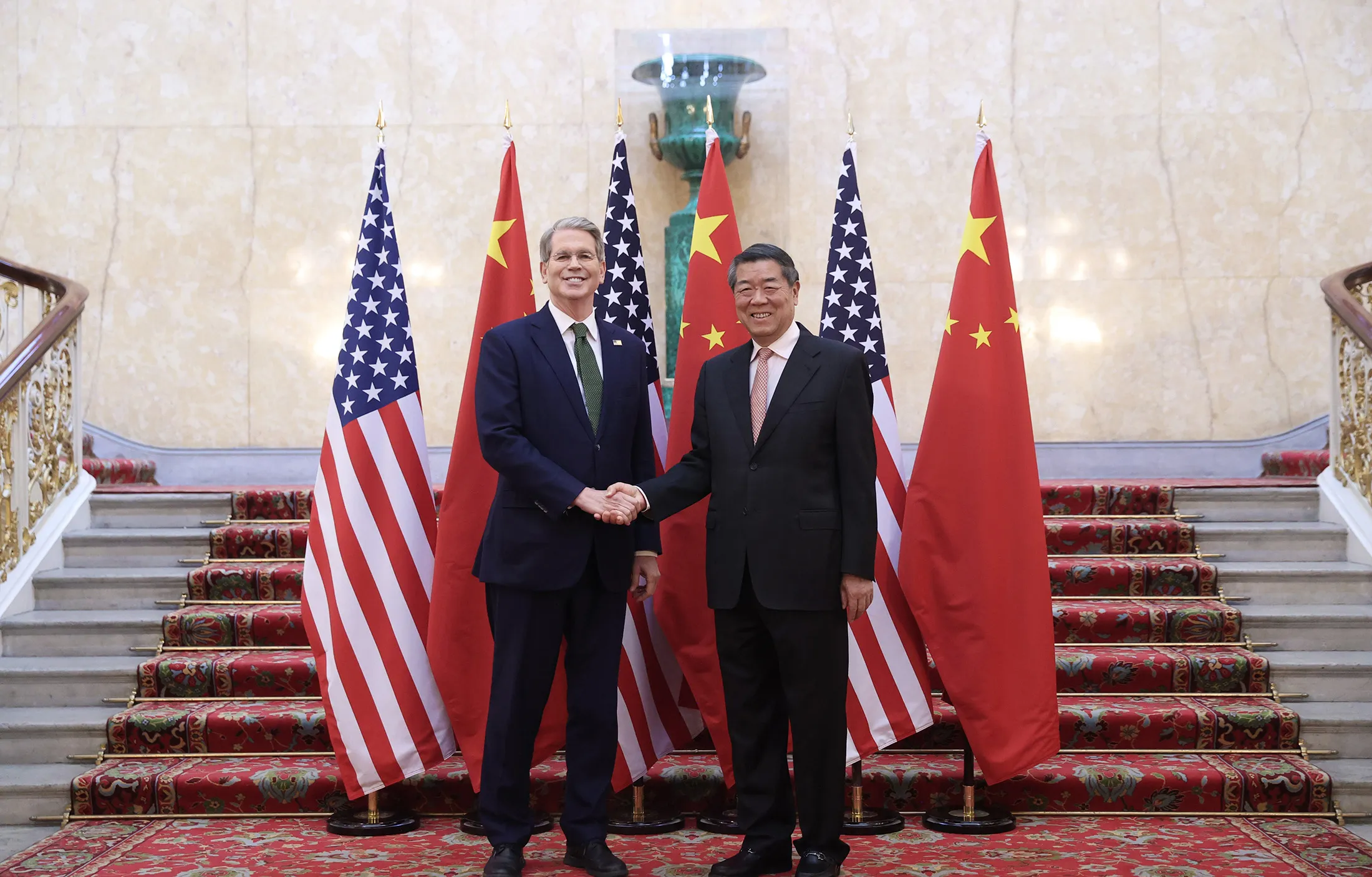
US-China trade talks are continuing at a pace not seen in recent years. Treasury Secretary Scott Bessent has become the most active US official engaging China, with multiple meetings held across the globe this year.
Unlike previous structured dialogues, Bessent’s approach is flexible. Speaking after the latest round in Madrid, he described the meetings simply as “trade talks.” This follows discussions in Geneva in May, London in June, and Stockholm in July. Another round is expected before the end of the year.
Bessent usually meets with Trade Representative Jamieson Greer and occasionally with Commerce Secretary Howard Lutnick. Despite the informal setup, the talks aim to ease tensions between the world’s two largest economies. The Madrid meeting also helped prepare for a scheduled call between Presidents Donald Trump and Xi Jinping.
Experts note that China may prefer a more formal arrangement. Dennis Wilder, a former White House and CIA China specialist now at Georgetown University, said Beijing wants a dedicated point person and fewer negative statements from US officials.
Bessent has outlined a broader goal for these talks: a “beautiful rebalancing” of the two economies. The vision involves China focusing more on domestic demand while the US strengthens its manufacturing sector to meet local needs.
While achieving this goal remains uncertain, both nations appear willing to extend the 90-day deadline for extreme tariffs. Bessent and Greer indicated that another meeting with Chinese officials is likely before November 10.
“We have a Geneva framework, a London framework, a Stockholm framework, and now a Madrid framework,” Bessent said. “We’re moving toward something — we’re not sure where it’s going to end up. But it’s useful. It’s useful that the teams have cordial relationships and understand each other better.”
Bessent’s frequent engagement marks a departure from past Treasury practices. His ad-hoc schedule is at least five times more intensive than the efforts of Timothy Geithner and Hillary Clinton following the Strategic and Economic Dialogue under Paulson.
The ongoing talks focus on trade, tariffs, and long-term economic alignment. While informal, the meetings foster steady communication between US and Chinese officials. This approach may help prevent misunderstandings and promote cooperation in areas like technology, manufacturing, and domestic market growth.
Observers say the repeated interactions build trust, even without an official title for the series. For now, the “trade talks” framework allows both sides to address sensitive issues while maintaining flexibility.
The Madrid round, according to officials, included discussions on tariff rollbacks, market access, and investment regulations. Bessent emphasized that consistent dialogue helps create mutual understanding and avoids abrupt policy shifts that could escalate tensions.
Looking ahead, the US-China trade talks may continue evolving in frequency and scope. While the ultimate outcomes remain uncertain, Bessent’s strategy highlights the value of regular engagement and the potential for economic collaboration between the two largest global economies.
