

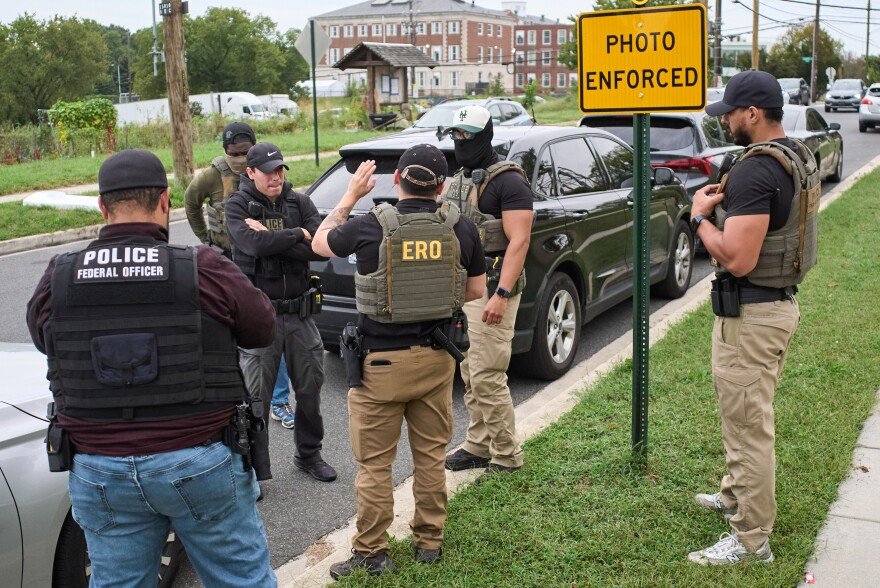
A U.S.-born construction worker in Alabama has filed a federal lawsuit after being detained twice by immigration agents, despite being a citizen. The case raises concerns about workplace raids that critics say disproportionately target Latino workers, regardless of legal status.
The lawsuit was filed by 28-year-old Leo Garcia Venegas, a concrete worker in Baldwin County, Alabama. Venegas said he was detained twice within weeks, even after showing valid identification both times. Partnering with the Institute for Justice, a public interest law firm, Venegas seeks to halt what he and his attorneys call unconstitutional and discriminatory enforcement practices.
Both encounters occurred at construction sites, where agents arrived without warrants. Venegas presented his Alabama Real ID driver’s license, available only to U.S. citizens and legal residents. Yet officers accused him of using a fake ID before releasing him. In one instance, he was forced to the ground while asserting his citizenship. A coworker filmed the incident, showing agents focusing on Latino workers while leaving others alone.
The lawsuit comes weeks after the Supreme Court lifted a restraining order limiting immigration agents in Los Angeles from detaining people based on race, language, job, or location. That decision expanded federal agents’ authority, even as legal debates continue.
The Department of Homeland Security dismissed the Alabama case as “race-baiting opportunism.” Tricia McLaughlin, assistant secretary for DHS, said arrests are based on “reasonable suspicion” of unlawful presence, not ethnicity. However, she did not explain why Venegas, a confirmed U.S. citizen, was detained twice.
Venegas said the encounters left him fearful and frustrated. “It feels like there is nothing I can do to stop immigration agents from arresting me whenever they want,” he said. “I just want to work in peace. The Constitution protects my ability to do that.”
The lawsuit highlights a pattern of workplace raids where agents enter without warrants, round up workers, and disproportionately target those with Latino names or appearances. According to the Institute for Justice, Venegas’s experience reflects a broader problem of racial profiling. The complaint argues that DHS assumes Latino construction workers are more likely to be undocumented.
In May, Venegas was detained for over an hour in one incident and about 20 minutes in the second. His attorneys argue these stops violated his rights and endangered his livelihood. “Immigration officers are not above the law,” said lawyer Jaba Tsitsuashvili. “Leo is a hard-working American citizen standing up for everyone’s right to work without being detained for the way they look or the job they do.”
The case also underscores the climate of fear surrounding workplace raids under Trump-era enforcement policies. These raids often target industries like construction and agriculture, where immigrant labor is common. Advocates say they disrupt communities and can mistakenly sweep up U.S. citizens.
The Gulf Coast region, where Venegas works, has seen rapid population growth over 15 years, increasing demand for construction workers. Many are Latino, both citizens and immigrants. Venegas’s attorneys argue that raids are intended more to intimidate workers than to enforce immigration law.
Legal experts note that courts have long struggled to balance immigration enforcement with constitutional rights. While presidents set enforcement priorities, repeated detentions of citizens like Venegas raise serious constitutional concerns. The case could test how far immigration officers can go in workplace raids and whether citizens can be wrongly targeted without consequence.
For Venegas, the lawsuit is about protecting all workers. His attorneys seek compensation for his treatment and an injunction to prevent further unlawful raids. The case now moves forward in federal court, potentially setting an important precedent for workplace immigration enforcement nationwide.
