

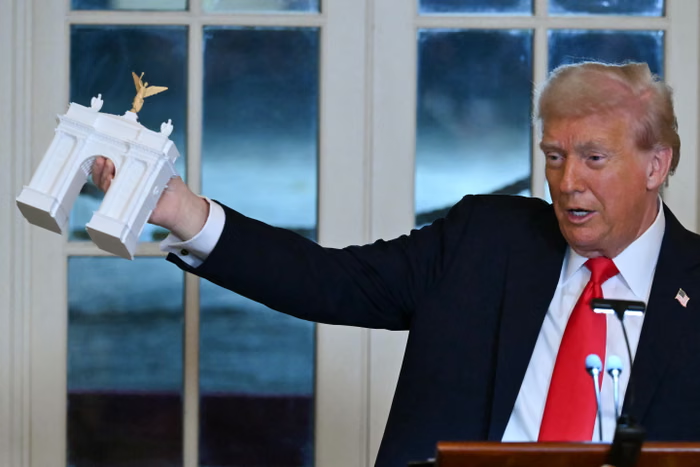
President Donald Trump unveiled plans for a triumphal arch at a White House donor dinner on Wednesday. The event drew dozens of potential contributors to his proposed $250 million White House ballroom.
Representatives from major companies with business before the federal government attended the East Room gathering. Firms included Lockheed Martin, Microsoft, Meta, Google, Amazon, and Palantir.
During the dinner, Trump shared his view that a White House ballroom had been a goal for presidents for more than a century. He also displayed a model of the triumphal arch he wants to build across from the Lincoln Memorial.
Trump described the proposed arch location and referenced a 1902 plan to place a statue of Robert E. Lee nearby. “In 1902, they were going to put a statue of Robert E. Lee up, would have been okay with me, a lot of people wouldn’t have liked it, would have been okay with me, would’ve been okay with a lot of the people in this room,” he said.
The event illustrates Trump’s ongoing efforts to gather support and funding for his ambitious White House renovation projects. The proposed ballroom and arch reflect his vision of creating high-profile spaces for official and ceremonial events.
White House donor dinners are a long-standing tradition where leaders showcase projects and encourage contributions. This event highlighted Trump’s continued influence among corporate and political circles despite no longer holding office.
While the $250 million ballroom has drawn attention for its scale and cost, the proposed arch is likely to attract debate due to its symbolic placement near the Lincoln Memorial. Architectural and historical experts often note that new constructions in sensitive locations require careful review and approval.
Attendees reportedly reacted positively to the model and Trump’s presentation, signaling support for his vision. Many companies with federal interests maintain relationships with former officials to stay informed about policy perspectives that may impact their operations.
Trump’s plans for the White House ballroom and triumphal arch may face scrutiny from historians, preservationists, and lawmakers. Critics are expected to question the cost and necessity of such large-scale projects within a historically significant area.
Despite potential controversy, the event reinforced Trump’s ability to engage high-profile donors and present large-scale architectural ideas. His vision for the White House combines historical references with personal touches, aiming to leave a lasting mark on the iconic building.
The East Room gathering highlights the intersection of politics, fundraising, and public displays of vision. For Trump and his supporters, the proposed ballroom and arch symbolize both ambition and a continued presence in national affairs.
Trump White House arch plans are likely to remain in the spotlight as debate continues over cost, design, and historical implications. The project underscores the influence of former leaders in shaping public spaces and architectural initiatives tied to political legacy.
