

A federal judge has refused to immediately stop President Donald Trump from sending National Guard troops to Illinois, following a lawsuit filed by the state on Monday. Troops from Texas could arrive in Chicago as soon as Tuesday or Wednesday, while Trump also seeks to federalize the Illinois National Guard. A similar attempt to deploy troops in Portland, Oregon, was blocked by a judge.
Illinois filed the lawsuit after Trump ordered National Guard forces into the state without the consent of Governor JB Pritzker. State Attorney General Kwame Raoul asked the court to block the president from deploying state or out-of-state troops “immediately and permanently.” The lawsuit argues that Americans should not live under the threat of military occupation simply because state or city leaders disagree with the president.
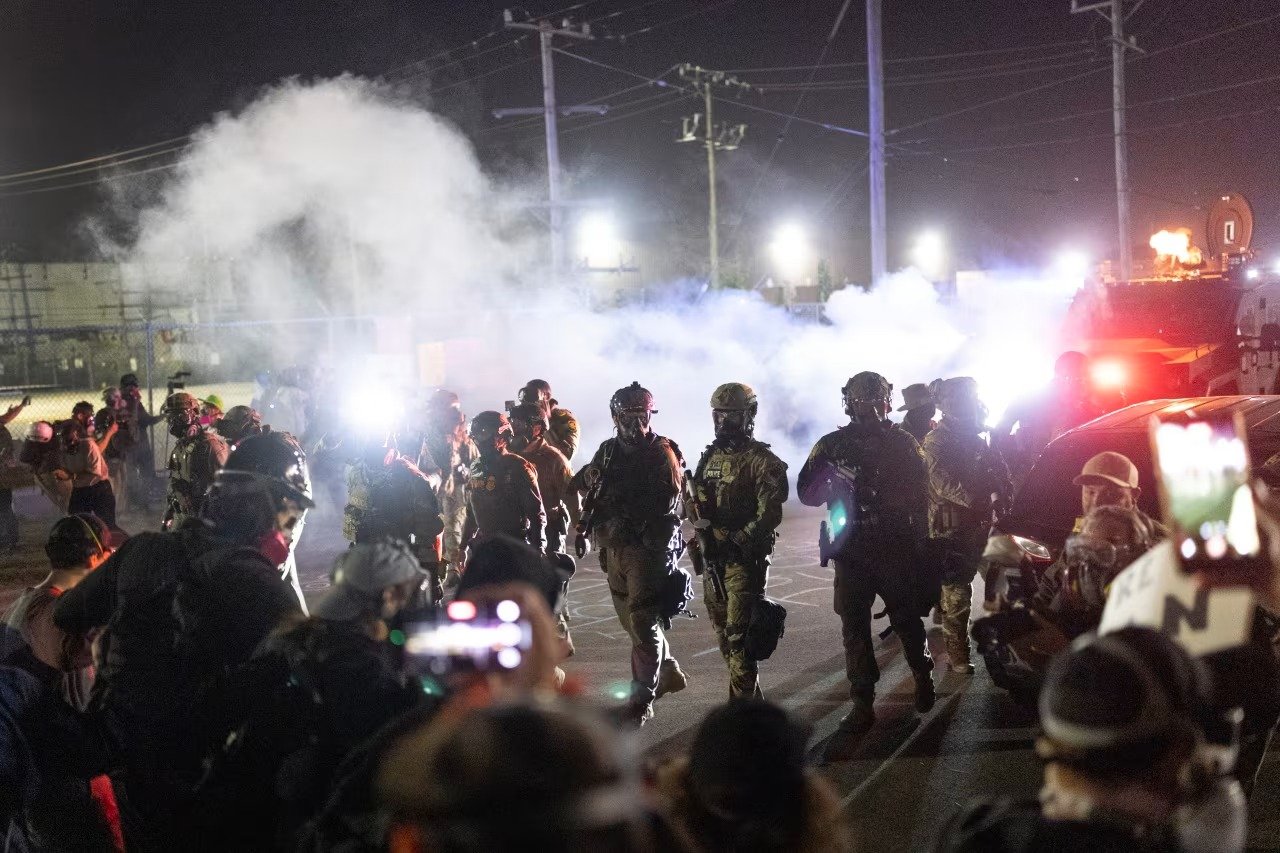
Trump has previously sent federal forces to Democratic-led cities to suppress protests and support immigration enforcement. Illinois officials warn that sending troops without state approval undermines local control and could increase tensions. Raoul said such actions “harm community relations, increase mistrust of police, depress business activities, and reduce tax revenue.”
Governor Pritzker called the deployment “Trump’s invasion,” stating that federal troops threaten Illinois residents against their will. He said the administration did not consult state leaders before attempting to federalize the Illinois National Guard or bring in troops from other states.
In other states, a Trump-appointed judge blocked troop deployments to Portland, Oregon. California Governor Gavin Newsom is fighting a similar federal effort, while Texas Governor Greg Abbott, a Republican, approved sending troops to both Portland and Chicago.
Trump adviser Stephen Miller criticized the court decision, calling it an “egregious violation of constitutional order” and claiming judges are undermining the 2024 election results.
In Chicago, Mayor Brandon Johnson issued an executive order preventing federal immigration agents from using city property, including public school lots, for operations. He accused the federal government of violating residents’ rights and abusing authority, saying, “We will not stand for ICE agents detaining elected officials, tear-gassing protestors and children, or harming Chicago police and residents.”
White House Press Secretary Karoline Leavitt defended the deployment, arguing that cities like Chicago are refusing help because they dislike the president. She said the troops are intended to make cities safer and assist local leaders who have struggled to maintain security.
The legal and political dispute over the troop deployments highlights tensions between federal power and state sovereignty. As the National Guard prepares to arrive in Illinois, residents, city officials, and state leaders are bracing for protests and potential court battles that could shape how the federal government works with local authorities in future crises.
