

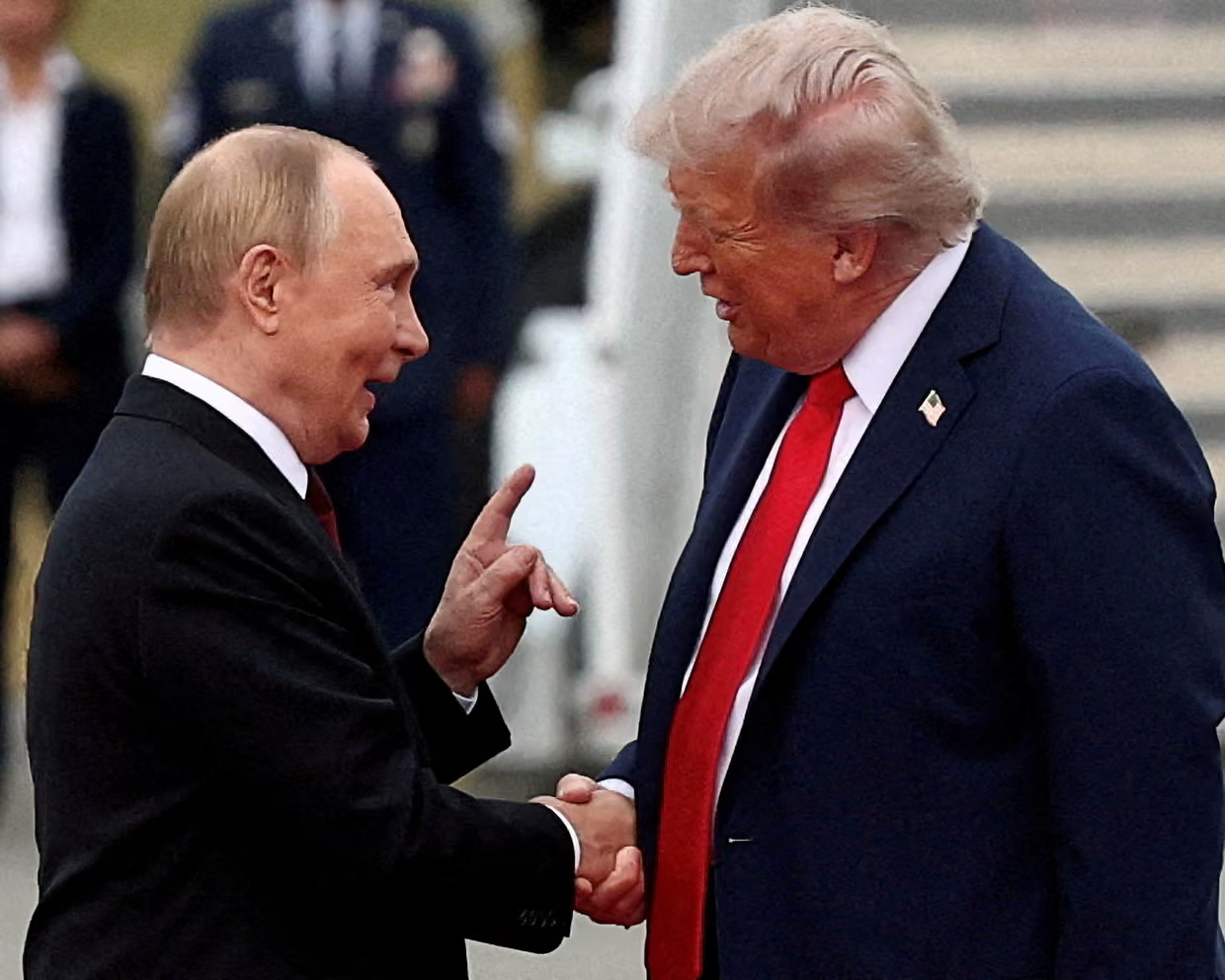
Plans for a Trump-Putin summit in Budapest have been shelved as efforts to end the Ukraine war face setbacks. The White House confirmed that there are now “no plans” for a meeting between the US and Russian leaders in the immediate future.
The announcement follows recent diplomacy that did not produce progress toward a ceasefire. Last week, US Secretary of State Marco Rubio spoke with Russian Foreign Minister Sergei Lavrov. Lavrov said Russia’s negotiating position remains unchanged, referencing agreements made at the Alaska summit.
“I want to officially confirm: Russia has not changed its position,” Lavrov told Rubio, confirming the day before that the situation remains the same.
Former President Donald Trump told reporters he did not want a “wasted meeting” with Putin. “I don’t want to have a waste of time, so I’ll see what happens,” he said.
The Budapest summit was initially planned after a call last Thursday between Trump and Putin. During the call, Putin suggested giving up parts of Kherson and Zaporizhzha provinces in exchange for all of Donetsk, an area heavily contested by Ukraine. Trump initially considered the plan but later rejected it, saying Donetsk should remain “cut the way it is.” He added, “Stop fighting, stop killing people. They can negotiate something later on down the line.”
Ukrainian President Volodymyr Zelenskyy said Kyiv remains aligned with its Western allies but noted that Russia is showing less interest in serious negotiations. Trump’s delay on supplying Tomahawk cruise missiles to Ukraine also affected discussions.
Trump met Zelenskyy in Washington on Friday after his call with Putin. Reports suggest that the White House floated the idea of territorial concessions by Ukraine, which Kyiv rejected. At the same time, discussions on US missile support stalled. Kyiv believes Tomahawks, with a range of about 1,000 miles, would allow Ukraine to target Russian military and industrial sites, though Russia views this as escalation.
On Tuesday, Zelenskyy and leaders from the UK, France, Germany, Italy, and Poland backed Trump’s call for a ceasefire along current frontlines. They emphasized that negotiations should start from the existing line of contact. Political leaders from Finland, Norway, Denmark, and the European Commission also endorsed the statement.
While Ukraine is unwilling to recognize Russian annexation of occupied territories, it is open to a ceasefire along current battle lines. This would acknowledge Moscow’s control over roughly one-fifth of Ukraine, reflecting the limits of Kyiv’s military pushback.
Reports also indicate that Ukraine and its European allies are drafting a 12-point ceasefire plan. A peace board chaired by Trump would oversee its implementation. Past Ukrainian proposals include returning children taken to Russia and releasing prisoners of war. Thirty Western nations, led by the UK and France, have agreed to support a multinational stabilization force to secure Ukraine’s airspace and waters and train ground forces.
European leaders stressed the need to increase pressure on Russia’s economy and defense industry until it is ready to negotiate peace. EU and G7 officials are moving forward with plans to provide Ukraine access to €140 billion of frozen Russian central bank assets. These funds, mostly held in Belgium, would support Ukraine’s defense and be structured as a loan against future Russian reparations.
The funds would be underwritten by G7 countries to ensure Belgium is protected in case of complications. This effort signals a long-term strategy to strengthen Ukraine’s resources while pressuring Russia to agree to a sustainable ceasefire.
