
Over the Labor Day weekend, social media platforms lit up with speculation about Donald Trump’s health. Phrases such as “Trump dead,” “is Trump dead,” and “Trump death rumours” ranked among the most searched terms on Google. Memes, edited videos, and speculative posts suggested that the 79-year-old president had died. By Tuesday, Trump appeared in the Oval Office, dismissing the rumours and insisting he had been “very active over the weekend.”
The false reports were less about his condition and more about the modern internet, where conspiracy theories, partisan hopes, and misinformation spread faster than facts. The absence of his usual constant media presence proved enough to trigger panic, satire, and online chaos.
Observers noted that Trump’s disappearance for several days was unusual. He stayed in Washington with no public events and made no direct comments. Blurry photographs of him leaving the White House to visit his Virginia golf course offered little reassurance. For millions used to his nonstop speeches and social media posts, the silence became fuel for speculation. Larry Jacobs, a political analyst, noted that the rapid spread of false claims showed how easily misinformation can capture attention. Many people believed the rumours simply because Trump had not been visible for 48 hours.
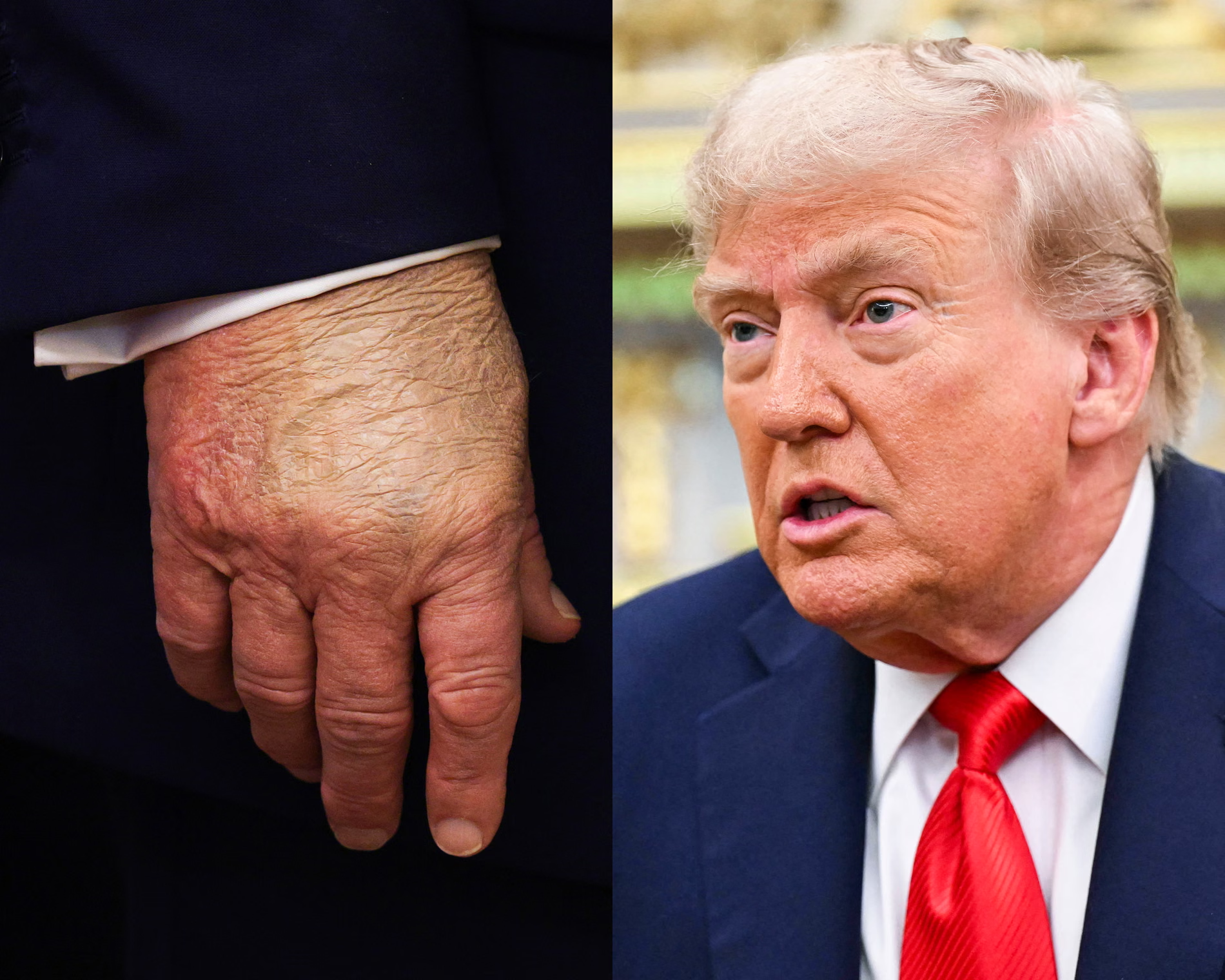
Questions about Trump’s health are not new. The White House has confirmed that he suffers from chronic venous insufficiency, a condition that causes blood to pool in the legs. Swelling around his ankles and visible bruises on his hand have added to speculation. Press secretary Karoline Leavitt explained that the bruises came from frequent handshakes and regular use of aspirin, a medication Trump takes to lower the risk of heart attack and stroke. While often associated with a diet heavy in fast food, he has stated that he avoids alcohol and smoking.
Vice President JD Vance told USA Today that Trump was in good shape but admitted he was ready to step in if necessary. The statement reassured some but also gave new life to the rumours. Online users speculated that Trump was being treated in secret at Walter Reed medical center after noticing road closures near the hospital. Others posted satirical content, including a decades-old photograph of Trump with Jeffrey Epstein, falsely described as proof of his good health.
Trump’s own social media posts did little to calm the frenzy. He wrote that he had “NEVER FELT BETTER IN MY LIFE,” but critics dismissed the message as staged by aides. For supporters, the rumours were evidence of another attack by his political enemies. For critics, his silence and unusual schedule were enough to assume something serious had happened.
The episode also revealed how central Trump is to America’s political conversation. Reed Galen, a political strategist, compared the reaction to withdrawal symptoms. He explained that when Trump disappears for even 36 hours, both the media and his opponents feel an absence, leading them to fill the gap with speculation. The constant flow of his speeches, social media posts, and controversies has become part of daily political life, and when it stops, conspiracy theories rise to replace it.
Commentators also pointed to a double standard in coverage. At the same age, Joe Biden’s health drew constant headlines, while Trump often avoids the same level of scrutiny. Critics argued that Trump himself fueled this imbalance, spending years attacking Biden’s fitness for office while avoiding similar questions about his own age and condition.
Like many Trump controversies, the rumours were quickly turned into a political tool. A pro-Trump fundraising group sent an email to supporters titled “I’M ALIVE!” accusing the media and the left of spreading lies about his death. The message invited supporters to donate money to “stand with Trump,” transforming the false speculation into a campaign asset.
The Trump death rumours exposed how fragile truth can be in the fast-moving digital world. A few days of silence was enough to create panic, jokes, and viral conspiracy theories. Trump’s denial may have ended this round of rumours, but the episode proved how dependent modern politics has become on his constant visibility. For a figure who thrives on attention, even brief silence can feel louder than words.
