

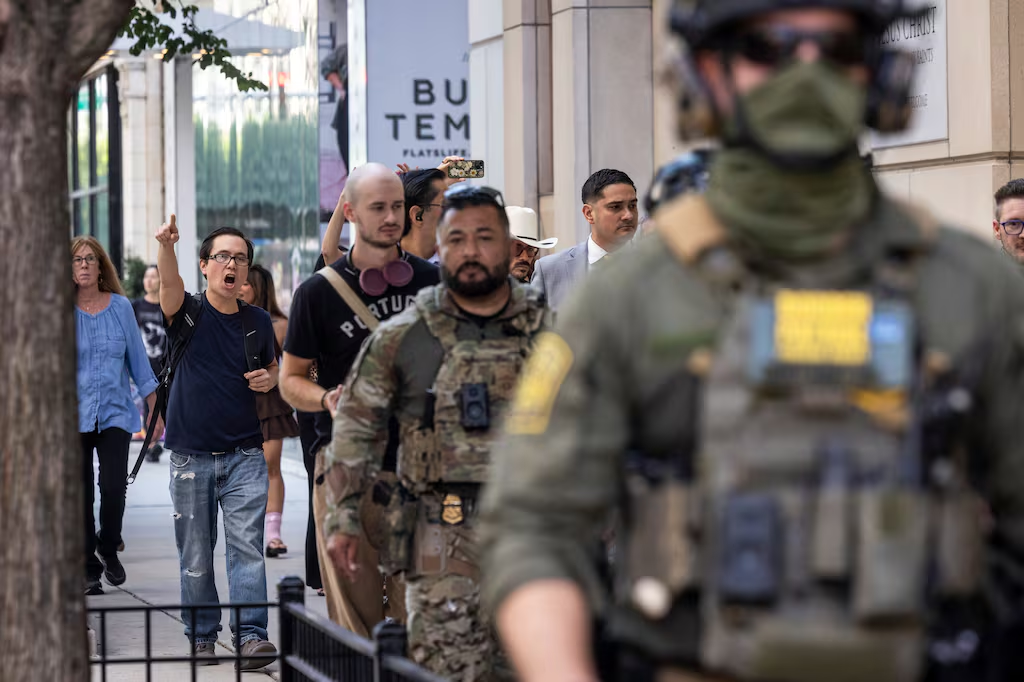
Texas National Guard troops have arrived in Chicago, escalating tensions over President Donald Trump’s immigration crackdown. The deployment follows weeks of protests, clashes, and legal disputes between the White House and Illinois officials.
Federal immigration enforcement has intensified in areas like Broadview, a Chicago suburb, where police used tear gas and pepper spray against protesters opposing immigration raids. Illinois and city officials filed a lawsuit to block the deployment, arguing the federal government cannot send troops without state consent.
U.S. District Judge April Perry denied the request to stop the deployment, allowing Texas National Guard personnel to be stationed around the city. Illinois Attorney General Kwame Raoul called the move unconstitutional and an abuse of executive power.
Chicago Mayor Brandon Johnson responded by issuing an executive order banning ICE agents from operating on city-owned property. He emphasized the city must defend its residents and laws against what he described as “unchecked federal interference.”
The White House criticized Johnson, claiming the order protects criminals and obstructs federal law enforcement. Trump’s administration maintains that the troops are necessary to strengthen immigration enforcement and restore order. Illinois Governor J.B. Pritzker also condemned the deployment, arguing that troops should not be used in cities absent a real emergency or insurrection.
Senator Dick Durbin called the move both unlawful and unnecessary, asserting that the National Guard should not be politicized. Chicago joins other Democratic-led cities, including Portland, Los Angeles, and Washington D.C., targeted by federal crackdowns, which have provoked similar backlash.
Despite Trump’s claims that these operations curb illegal immigration and violent crime, local data shows falling crime rates in many targeted cities. Legal challenges and political opposition continue to mount as the Texas National Guard remains stationed across Chicago.
The situation highlights ongoing friction between the Trump administration and state authorities, raising concerns about civil rights, federal authority, and the use of military forces in domestic law enforcement.
