

The Supreme Court has agreed to hear an appeal concerning tariffs imposed by former President Donald Trump during his second term. If the court rules against Trump, businesses could receive refunds, and consumers might see some long-term price decreases. However, the decision may also bring economic uncertainty.
The justices will hear arguments in November. Trump has warned that striking down these tariffs could lead to an “economic disaster.” Economists are more cautious, noting that the effects on prices may not be immediate. Rohit Tripathi, vice president of industry strategy at Relex, said refunds could help companies’ bottom lines, but consumers likely will not see prices drop quickly. Many businesses have absorbed higher costs themselves or asked suppliers to cover them. Tripathi noted, “A lot of the businesses so far have either been absorbing those increased costs or pushing their suppliers to absorb these costs.”
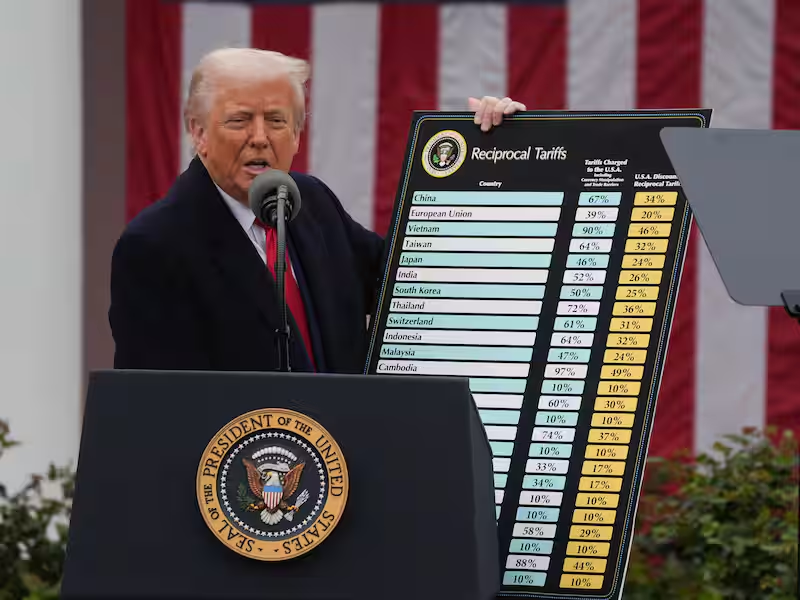
The case focuses on tariffs enacted under the International Emergency Economic Powers Act (IEEPA). This law allows the president to take economic actions, including limiting imports or exports, in response to national emergencies affecting security, foreign policy, or the economy. Trump invoked IEEPA on February 1, issuing tariffs on imports from China, Canada, and Mexico. These tariffs were tied to declared emergencies over drug trafficking and illegal immigration, often called the “fentanyl tariffs.” On April 2, Trump declared another emergency regarding trade deficits and unfair trade practices. Based on this declaration, he imposed at least a 10% tariff on most imports, along with higher, country-specific reciprocal tariffs.
This case does not involve sector-specific tariffs on steel, aluminum, or other goods, which were issued under Section 232 of the Trade Expansion Act of 1962. Only tariffs enacted under IEEPA are being reviewed. If the Supreme Court strikes down these tariffs, businesses could benefit from refunds, but the timing of price decreases for consumers is uncertain. Market experts say that while long-term effects may include lower costs, immediate relief in stores is unlikely. Some analysts also caution that legal challenges could create further uncertainty for trade policies and supply chains. Companies may delay investment or adjust sourcing decisions until the court issues a final ruling.
The Supreme Court’s decision could reshape the U.S. approach to presidential tariffs. A ruling against Trump would limit the use of IEEPA for broad trade measures and influence future administrations’ trade strategies. Arguments are set for November, and a decision could have long-term effects on both international trade and domestic business operations. Businesses, consumers, and policymakers will watch closely as the court evaluates the limits of presidential authority over tariffs.
