

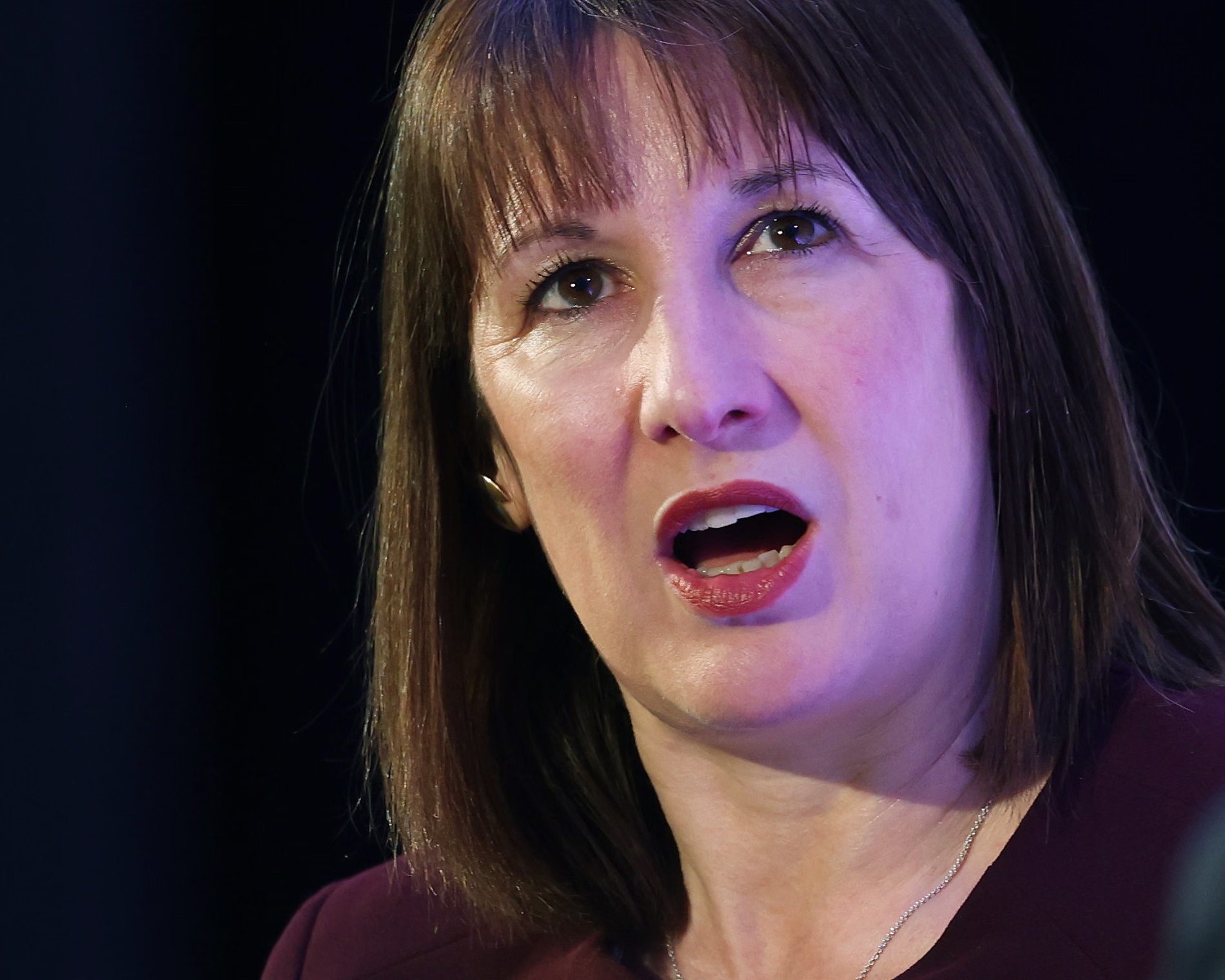
Labour Chancellor Rachel Reeves has been urged to cut employee national insurance (NI) by 2p and raise a corresponding amount via income tax in her upcoming autumn budget. The proposal, put forward by the influential Resolution Foundation, could raise up to £6bn a year while leaving workers’ pay unaffected.
The thinktank, closely connected with Labour ministers, argued that the “2p switch” would help level the playing field across the UK’s £1tn-a-year tax system. Income tax reaches a broader group than employee NI, including pensioners, landlords, and the self-employed. While income tax is devolved in Scotland and Wales, the Resolution Foundation expects similar measures to be adopted there.
According to the foundation, the switch would correct long-standing “unfairness” in the tax system, spreading the burden more evenly across society. Critics note, however, that the move could challenge Labour’s manifesto pledge not to increase income tax.
The proposal builds on the 4p NI cut introduced by former Conservative chancellor Jeremy Hunt, which was not offset by higher income tax. Reeves’s plan would continue to protect the pay packets of working-age employees while broadening the tax base.
The autumn budget, due on 26 November, comes amid heightened scrutiny of Labour’s economic management. Economists warn that welfare reversals, high borrowing costs, and a potential downgrade in productivity from the Office for Budget Responsibility could leave the Treasury with a shortfall of up to £40bn.
Reeves has remained cautious on tax announcements, emphasizing the government’s goal to boost economic growth and fund public services while safeguarding workers and encouraging business investment.
The Resolution Foundation’s £30bn package of proposals also includes expanding employer NI to limited liability partnerships, tackling unpaid small-business corporation tax, implementing broader sugar and salt levies, introducing carbon charges on long-haul flights and shipping, and adjusting vehicle excise duty to reflect environmental and road damage costs.
Adam Corlett, the foundation’s principal economist, said the measures “would raise revenue while doing the least possible harm to workers and the wider economy,” enabling the chancellor to focus on growth.
A Treasury spokesperson said: “The chancellor makes tax policy decisions at fiscal events. We do not comment on speculation around future changes to tax policy.”
