

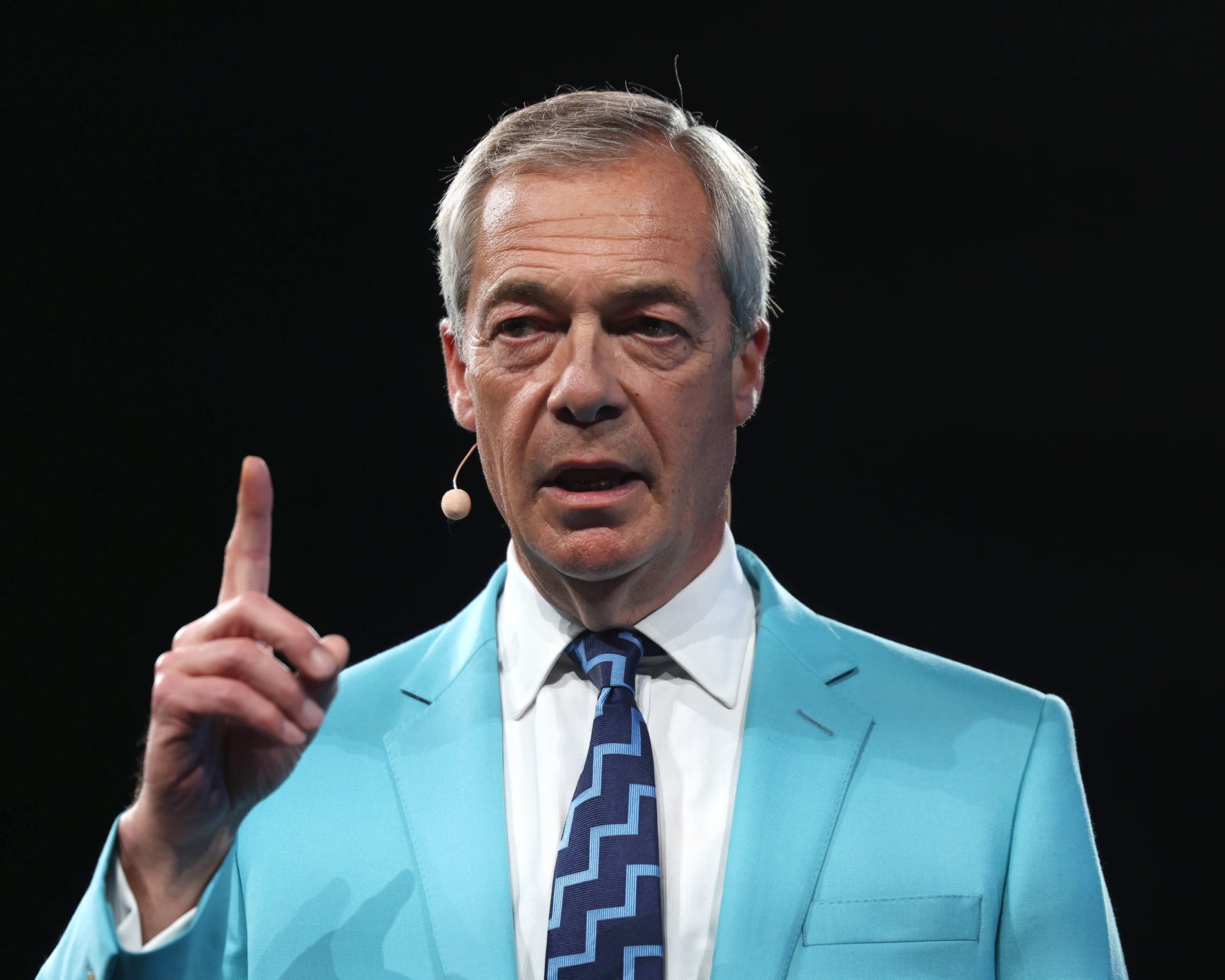
Nigel Farage has admitted he was wrong to claim he bought a house in Clacton, the constituency he represents. He explained that the property in question belongs entirely to his long-term partner, Laure Ferrari, and not to him.
The controversy began when reports earlier this year showed the detached home in a well-off part of Clacton-on-Sea was bought solely by Ferrari. At the time, Farage insisted his name was not on the deeds due to what he called security reasons. However, he has now acknowledged that his earlier remarks about purchasing the house were not correct.
Speaking during the Reform UK conference in Birmingham, Farage said he had misspoken when referring to the house purchase. He admitted he should have said “she” instead of “we” when describing the deal. He stressed that the money used to buy the home was Ferrari’s and that he holds no share in it. Farage added that he spends time there but wanted to avoid putting his partner into the public eye.
His earlier statements painted a different picture. Last November, when asked about how much time he spent in Clacton, he told Sky News he had “exchanged contracts” on a house and insisted he was now a local resident. In January, he repeated the claim, telling a radio audience he often did local shopping on weekends, even joking about buying tonic and limes.
The ownership details led to further questions about tax rules. Critics raised the possibility that Ferrari’s sole ownership could reduce the tax bill by avoiding higher-rate stamp duty, which applies when someone already owns other properties. Questions also arose about whether Farage helped finance the house through gifts or loans, and whether Ferrari qualified for standard rates as her only home in the UK.
Reform UK deputy leader Richard Tice dismissed these concerns as irrelevant to voters. Still, the timing of the admission has drawn attention, especially because Farage has often been critical of other politicians’ tax affairs. During his conference speech, he had accused Labour’s Angela Rayner of entitlement after her own tax dispute. When asked if he would publish his tax return if he became prime minister, Farage said it would be “an imposition too far.” He added that, if in office, his business dealings would be moved into a trust, making the matter less important.
The latest clarification comes just days after reports about Farage’s earnings from his television work. He has been using a private company to manage payments from his GB News show and other projects. This structure allows him to pay corporation tax at 25 percent rather than income tax at 40 percent, while also deducting some expenses. According to the parliamentary register of interests, Farage has earned nearly £400,000 from GB News since August 2024 for around 190 hours of work. Although legal, this practice has drawn criticism because he has previously described people who avoid tax as a “common enemy.”
The political fallout from the Clacton house issue highlights the growing pressure on Farage. His original claim that he bought the property was seen as an effort to counter criticism that he did not spend enough time in the constituency. By admitting the home is his partner’s, he has opened the door to renewed debate about honesty and transparency in politics.
Despite the controversy, Farage remains a central figure in Reform UK’s strategy to challenge the main parties. At the Birmingham conference, he suggested a general election could come as soon as 2027. Supporters may see his slip as minor, but opponents argue it reveals a wider pattern of questionable claims.
Farage continues to be one of the most visible figures in British politics and media. The Nigel Farage Clacton House dispute, along with his tax arrangements and media income, will remain under scrutiny as he seeks to expand his party’s influence in the years ahead.
