

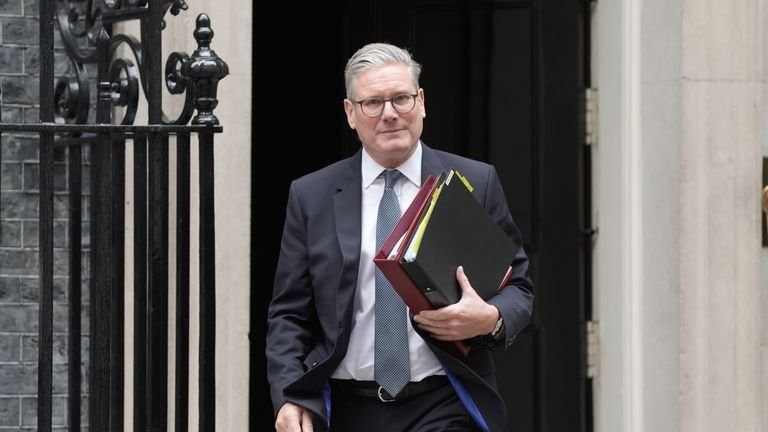
Keir Starmer has unveiled a new cabinet, emphasizing trusted ministers known for action and results. The reshuffle follows Angela Rayner’s resignation and signals a shift towards efficiency over politics. A large electronic whiteboard in the No 10 study guided the reshuffle, allowing names to move seamlessly across departments. Starmer and his advisers crafted a cabinet aimed at addressing Britain’s pressing issues, including immigration, welfare, and business relations. Veterans of past governments noted the high-tech approach as a stark contrast to the old Post-it note methods of arranging ministers.
The departure of Rayner marked a personal and political setback for Starmer. Yet, he quickly seized control, appointing new secretaries across ten Whitehall departments. Only John Healey, defence secretary since 2020, retained his original position. Former Labour lord chancellor Charlie Falconer described the changes as an “electric shock” to the government, signaling decisive leadership.
This reshuffle was not about ideology. Instead, it prioritized ministers who could deliver results in key areas. Starmer aimed to assign the most effective officials to departments facing the greatest challenges. One source noted that Starmer values Shabana Mahmood and Pat McFadden for their ability to implement complex policies and handle political pressures.
The Home Office saw the most significant adjustments. Angela Eagle, immigration minister, and Diana Johnson, policing minister, were moved to other roles. Yvette Cooper, previously resisting key Home Office reforms, was promoted to the Foreign Office, a move that eased her transition while ensuring the department had a leader ready to address urgent issues. Mahmood, who took over the Home Office, impressed with her handling of the prison crisis at the Ministry of Justice. She is expected to tackle illegal immigration and asylum challenges with innovative approaches, including potential legal reforms to clarify how European Convention on Human Rights rulings affect asylum cases. Allies suggest that Mahmood will focus on balancing security with fairness for law-abiding immigrant families frustrated by current asylum practices.
The reshuffle also impacts broader policy. With Mahmood’s support, the introduction of a universal digital ID system is now likely. This had faced resistance under Cooper, highlighting how personnel changes can reshape policy priorities. Pat McFadden has been appointed to lead a new superministry, merging the Department for Work and Pensions with skills responsibilities from the Department for Education. Starmer’s aim is to implement welfare reforms while minimizing the risk of parliamentary defeat. Housing also sees new leadership, with Steve Reed committed to an ambitious agenda of construction and development.
Peter Kyle, the new business secretary, is tasked with improving Labour’s relationship with businesses. Recent increases in employer national insurance contributions and expanded workers’ rights have strained ties with the business community. Jason Stockwood, a businessman and football club chairman, has been appointed investment minister, bringing practical business experience to the cabinet.
Overall, the reshuffle underscores Starmer’s preference for trusted, results-driven ministers. By placing “fixers and doers” in crucial departments, the prime minister seeks to address urgent issues, from small boat crossings to the welfare system, while strengthening ties with business leaders. The changes reflect a pragmatic approach, prioritizing effectiveness and stability over political positioning or ideological shifts.
