

The fragile ceasefire between Israel and Hamas faced its biggest test on Sunday after Israel carried out deadly airstrikes in Gaza and blocked all aid “until further notice.” The attacks followed a Hamas strike that killed two Israeli soldiers, deepening fears that the truce could collapse.
Palestinian officials reported that dozens of people were killed in Israel’s retaliatory raids. Israel said the operation targeted Hamas forces in Rafah, claiming it was a response to terrorist activity. Despite the violence, both Israel and Hamas later issued statements saying they remained committed to the ceasefire.
A senior Egyptian official said negotiations were ongoing to calm the situation. “Round-the-clock talks” were being held by regional powers to prevent a complete breakdown of the deal. US officials, including Vice President JD Vance, were expected to visit Israel to help uphold the peace agreement signed in Sharm el-Sheikh earlier this month.
Before the latest violence, tensions had already been rising. Israel accused Hamas of violating the ceasefire by delaying the return of hostages’ remains. Hamas had promised to return all the bodies of 28 deceased captives but said it needed more time. In Gaza, Palestinian officials accused Israel of breaking the truce dozens of times since it began, claiming dozens of people were killed in previous incidents.
The Israeli government has not officially confirmed the suspension of aid, but several media outlets reported that border crossings would stay closed. Israel’s defense ministry said the Rafah crossing with Egypt would remain shut “until further notice,” drawing criticism from humanitarian groups.
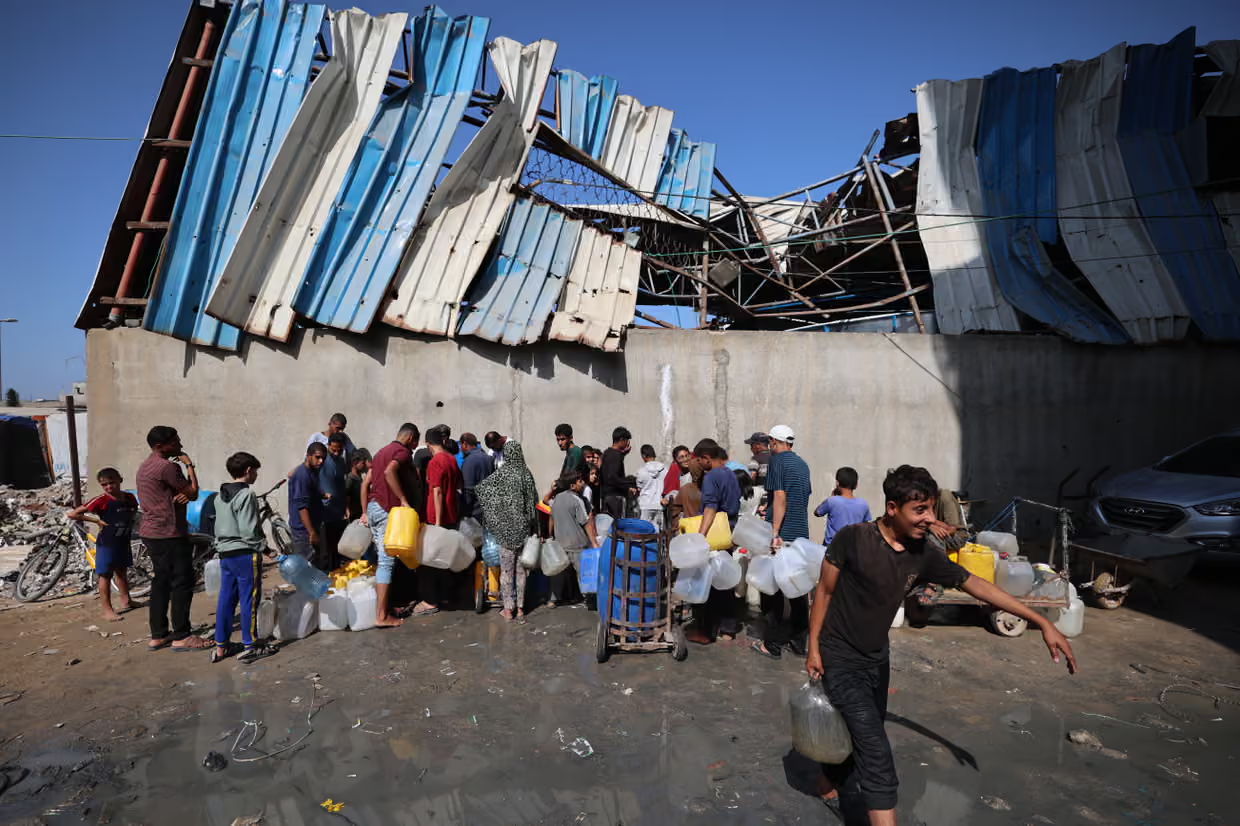
The ceasefire, brokered by Donald Trump’s administration, had raised hopes for more humanitarian relief in Gaza. But the new restrictions will worsen the crisis for millions of residents facing hunger and shortages of fuel and medicine. Famine had already been declared in parts of Gaza in August, and many hospitals are barely functioning.
According to the Israeli military, Hamas fighters attacked troops working to dismantle terrorist infrastructure in Rafah. Two soldiers—Major Yaniv Kula, 26, and Staff Sergeant Itay Yavetz, 21—were killed in the clash. They were the first Israeli casualties since the ceasefire began on October 10. Israel responded with a series of airstrikes targeting tunnels and military sites in Rafah and Beit Lahia in the north.
Prime Minister Benjamin Netanyahu ordered “strong action” against any ceasefire violations but stopped short of announcing a full return to war. His far-right allies, however, demanded tougher measures. Later, a military spokesperson said Israel had “begun renewed enforcement of the ceasefire” after carrying out “significant strikes” in response to Hamas’s attacks.
Palestinian officials said Israeli airstrikes hit several civilian areas. Six people died in a coffeehouse in al-Zawaida, two near the Al-Ahli soccer club in Nuseirat, and one in a tent in Khan Younis. Gaza’s civil defense agency reported at least 33 deaths in total, though the figures could not be independently verified.
Hamas official Izzat al-Risheq said the group remained committed to the ceasefire and accused Israel of violating the agreement. Hamas said communication with its fighters in Rafah had been cut off for months, adding that it was not responsible for recent incidents in the area. A Hamas delegation arrived in Cairo for talks on the next phase of the ceasefire.
Under the ceasefire deal, Hamas agreed to return all Israeli hostages, both living and dead, in exchange for the release of about 2,000 Palestinian detainees. Last week, Hamas returned the last 20 surviving hostages but has handed over only 12 of the 28 bodies so far.
On Saturday, two caskets were returned to Israel, identified as photographer Ronen Engel and Thai worker Sonthaya Oakkharasr, both killed during Hamas’s October 2023 raid. Engel’s wife and daughters were freed in a previous exchange.
The US State Department said there were credible reports that Hamas might violate the ceasefire with planned attacks on civilians. It warned that any such act would be considered a “grave breach” of the agreement.
Meanwhile, Israel returned 15 bodies of Palestinians to Gaza on Saturday, bringing the total to 135. Gaza’s health ministry said the death toll from the war has now exceeded 68,000. Thousands more remain missing in the rubble. The October 2023 Hamas raid that started the war killed 1,200 people in Israel and led to 251 abductions.
The renewed violence shows how fragile the ceasefire remains. Both sides claim to support peace, but each blames the other for breaking the agreement. As aid remains blocked and tensions grow, the people of Gaza continue to suffer from shortages, destruction, and fear that the war may soon return.
