

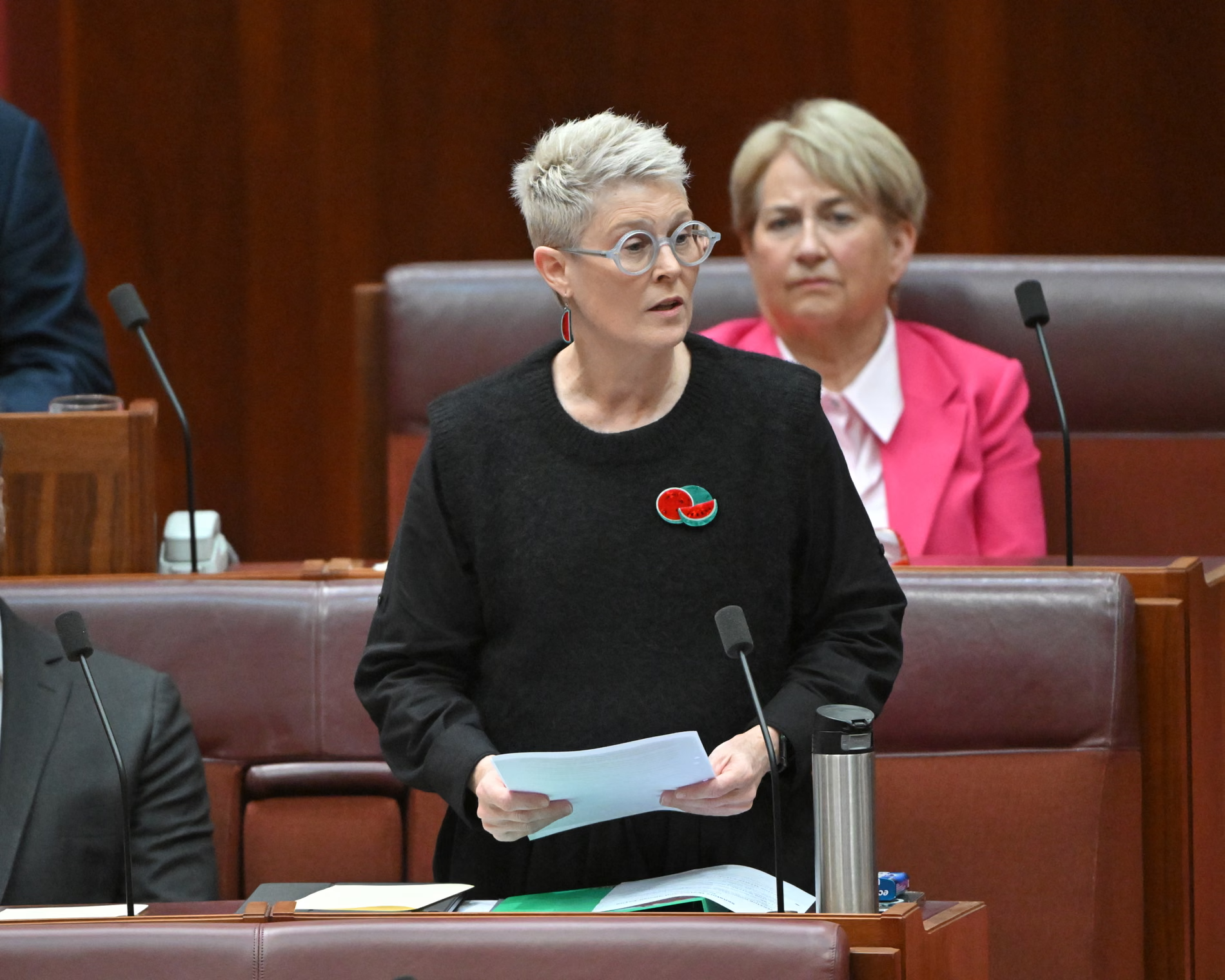
Labor may be forced to release immediate funding for in-home aged care as opposition and crossbench senators unite in the Senate. The government has been criticized for not addressing growing shortages ahead of a new system due in November. Delays in aged care services dominated federal parliament discussions on Monday. The Coalition used its questions in both the House of Representatives and the Senate to highlight widespread community frustration.
A Senate inquiry last week revealed that more than 121,000 Australians are waiting for assessments for in-home support. The official waitlist for approved recipients already exceeds 87,000 people. Currently, around 2,700 home care packages are released each week. These are not new places but existing packages reallocated from recipients who have passed away or no longer need in-home care. Public servants told the inquiry that they are ready to allocate new in-home care places. The only barrier is the government’s decision to delay the rollout of the Support at Home program until 1 November.
The Support at Home program will replace existing home care packages. It was originally scheduled for introduction on 1 July. Labor expects the scheme to cut maximum wait times to 90 days by 2027. Independent senator David Pocock, Greens’ Penny Allman-Payne, and opposition aged care spokesperson Anne Ruston have negotiated a deal. Their plan supports amendments to government legislation aimed at immediately allocating new home care places. This would front-load the new system to meet current demand. The vote could see Labor face defeat in the Senate as early as Tuesday.
Allman-Payne warned that families are being advised by doctors to admit elderly relatives to hospitals because home care services are unavailable. She said the government’s refusal to release more home care packages is straining hospitals, particularly bed availability. She also criticized the funding model, stating it favors provider profits over the quality of life for older Australians. She said pensioners and renters deserve better access to care.
Aged Care Minister Sam Rae told parliament that demand for home care has doubled since 2020, from 155,000 to over 300,000 people. He added that government spending on the program has increased by about 800% in the last decade. Rae explained that the short delay in launching the new Aged Care Act is necessary to ensure programs like Support at Home are fully ready for older Australians and their families.
Kathy Eagar, a former adviser to the aged care royal commission, warned last week that the new program is poorly designed. She said it could increase pressure on already overstretched hospitals and residential care facilities. Eagar, a health and aged care expert at the University of New South Wales, told a Senate committee that the Support at Home program is “fundamentally flawed.” She said the government’s claims that it will reduce residential care demand are not credible.
Prime Minister Anthony Albanese said the May federal election contributed to the delay. He added that feedback from the aged care sector indicated the need for careful planning to ensure the new program is implemented correctly. Albanese emphasized that the delay is not a pause. Priority support continues, and older Australians are still receiving care.
Demand for aged care in Australia is expected to rise sharply. The number of people over 65 is projected to double, while those over 85 could triple within the next 40 years. The need for effective and timely in-home aged care has never been more urgent.
