

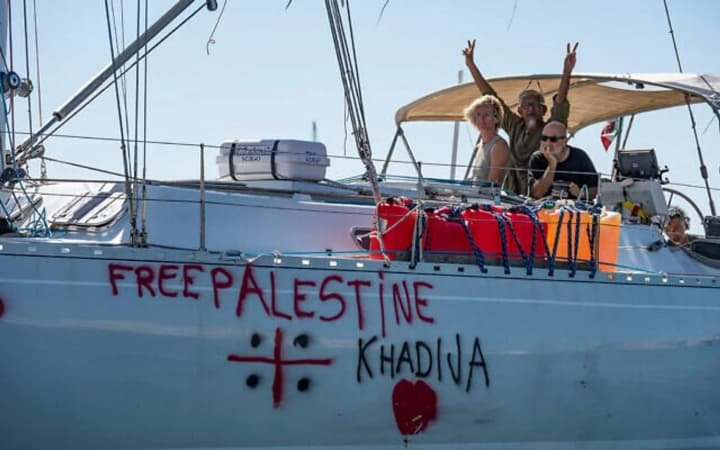
Israeli naval forces stopped a pro-Palestinian flotilla about 75 miles off Gaza’s coast. The vessels tried to bypass the maritime blockade to deliver humanitarian aid. The lead ship, Alma, carried Swedish climate activist Greta Thunberg along with other passengers, who were taken into custody during the boarding.
Videos released by Israeli authorities showed Thunberg sitting on the deck surrounded by soldiers. Tracking data indicated that 13 vessels were intercepted by early Thursday, while organizers said other boats continued toward Gaza, roughly 46 nautical miles from the shore.
Before the interception, Thunberg posted a video on Instagram warning of the upcoming boarding. She said, “My name is Greta Thunberg. I am onboard the ship Alma. We are about to be intercepted by Israel.” Following the boarding, Thunberg and other activists were transported to the Israeli port of Ashdod.
The Global Sumud Flotilla includes over 40 civilian boats carrying nearly 500 parliamentarians, lawyers, and activists. Their goal is to deliver humanitarian supplies to Gaza despite repeated Israeli warnings. Participants shared videos on Telegram showing they were taken to Israel against their will. They emphasized that their mission was peaceful.
The flotilla sailed in international waters north of Egypt when the interceptions began Wednesday afternoon. Israeli authorities consider the area a high-risk zone and have previously warned vessels attempting to breach the blockade. Around 7:25 p.m., approximately 20 Israeli naval ships approached the flotilla, instructing the vessels to turn off engines. Live footage showed passengers wearing lifejackets in a semi-circle on deck during the interception.
Videos from media outlets showed activists being sprayed with water jets, while loud bangs, likely from stun grenades dropped from drones, were heard near the boats. The flotilla called the boarding illegal, reporting that cameras were offline as Israeli personnel boarded the vessels.
Israel confirmed the interception, saying the flotilla was directed to Ashdod. Authorities stated aid could be unloaded there safely before transfer to Gaza. Israel said the vessels were entering an active combat zone and violating the blockade. Officials dismissed the mission as a publicity stunt. Italian authorities reported that Israel assured no violence would be used against activists.
The interception prompted protests across Italian cities including Bari, Bologna, Genoa, Milan, Naples, Pisa, and Rome. Trade unions also called for a general strike in support of Palestine.
Israel accused some flotilla members of links to Hamas but provided no evidence. Activists denied the claims, saying Israel was attempting to justify its actions. European governments, including Spain and Italy, which had escorted the flotilla during part of its journey, urged activists to avoid confrontation. Spain’s prime minister defended the mission as humanitarian, while Italy’s leader warned it could complicate efforts to resolve the Gaza conflict.
The flotilla departed Barcelona a month ago, planning to reach Gaza Thursday morning if unhindered. Israel’s naval blockade, intensified after Hamas took control in 2007, has been criticized by the United Nations as a violation of human rights and humanitarian law.
International law experts say a blockade can be intercepted if militarily justified, such as preventing weapons from reaching Gaza. However, the flotilla insists it carries no arms and focuses only on humanitarian aid. Past attempts to bypass the blockade have met with force. In 2010, ten Turkish activists were killed when Israeli commandos boarded the Mavi Marmara, the lead ship in a previous flotilla to Gaza.
This interception highlights the ongoing tension over Gaza’s blockade, the risks facing civilian aid missions, and the debate over the legality of Israeli naval actions in international waters. Activists stress their work is humanitarian, while Israel maintains that its blockade is legal and necessary for regional security.
