

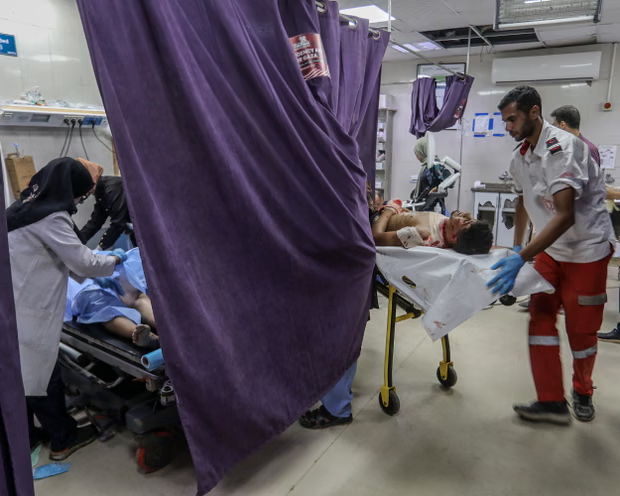
Gaza hospitals are struggling as a severe drug shortage leaves injured patients with little to no pain relief. Doctors are forced to perform operations without proper anaesthetics, and the few available painkillers are rationed.
Since 7 October 2023, more than 167,000 Palestinians have been injured in Gaza, according to the local health ministry. Many suffer from blast wounds, burns, amputations, and fractures, overwhelming hospitals already facing shortages of essential supplies.
At Nasser Hospital, Mahmoud*, a boy with a shattered knee from a gunshot wound, writhes in pain. Doctors can only offer a temporary nerve block, giving brief relief before the agony returns. Cases like his are increasingly common, as medical teams ration limited painkillers, including opioids and paracetamol.
More than half of the World Health Organization’s (WHO) medical missions into Gaza since January 2024 have been delayed, blocked, or canceled. These missions, intended to deliver medicines, hospital fuel, deploy staff, and evacuate patients, face repeated obstacles. Bombings of storage facilities and hospitals, along with border restrictions, worsen the crisis.
Eight doctors in Gaza described the extreme shortage of pain relief. Orthopaedic doctor Abdelkareem Alsalqawi explained, “Most injuries are amputations or open fractures. These are severely painful and require 24-hour painkillers. We now tell patients: one injection per day… use it at night so you can sleep.”
The Israeli government claims it allows medical equipment and supplies into Gaza, reporting over 3,500 tons transferred in recent weeks. However, aid groups and doctors say shipments are often delayed for weeks or months at the border, and some requests are ignored. The lack of a clear official list of barred items further complicates delivery.
Dr. Travis Melin, a visiting U.S. doctor in Gaza, criticized the restrictions, saying opioids are purely for compassionate care. “They don’t make you live longer or increase survival. They simply relieve severe pain,” he said. Yet, in Gaza, opioids are tightly rationed, sometimes limited to a single injection per patient each day.
Morphine, usually administered per patient in sterile vials, is now shared among several patients due to shortages. This raises infection risks and leaves doctors without reliable pain management tools. Many hospitals now rely on ketamine, a hallucinogenic anaesthetic, used as a “battlefield medication” during mass casualty events.
Ketamine provides short relief, often lasting only 45 minutes, and patients may become hallucinating or disoriented. Doctors pre-fill syringes for emergencies, but continuous dosing is unsafe. “For a severe injury or a procedure like a chest tube, patients get ketamine. But for something like a simple gunshot wound, most people are just toughing it out,” said Melin.
The lack of medical supplies also extends beyond painkillers. Hospitals face shortages of diagnostic tools, reagents, instruments, and essential equipment. Dr. Randa Abu Rabe of the WHO stressed that since March 2025, Gaza has gone months without proper medical deliveries. The combined effect of border restrictions, bombings, and internal logistical barriers has led to near-total collapse of the supply chain.
Legal expert Tania Hary added that distribution inside Gaza is also severely affected. “Breakdowns in public order and looting prevent aid, including expensive and sensitive items like medicines and equipment, from reaching hospitals,” she said. Many of these issues can be traced to Israel’s wartime policies and access restrictions.
For Gaza’s injured, the impact is immediate and severe. Amputees, burn victims, and patients with fractures often face hours or days without pain relief. Doctors are forced to improvise, and many patients endure extreme suffering while medical staff work with the limited supplies available.
The Israeli government stated it continues to cooperate with international agencies to facilitate medical care. Yet on the ground, hospitals remain overwhelmed, and the shortage of pain relief medicine continues to put patients at risk.
