

The French Socialist Party is pushing to introduce a new wealth tax targeting the country’s richest individuals as parliament prepares to debate next year’s budget. The move comes amid a political crisis that has weakened Prime Minister Sébastien Lecornu’s position.
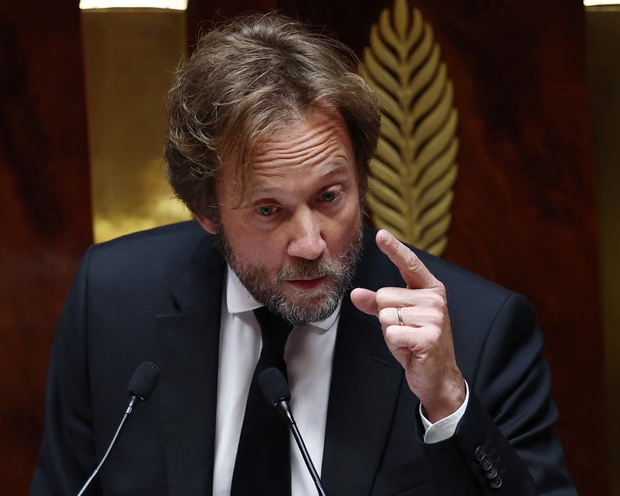
Boris Vallaud, head of the Socialist parliamentary group, said on Wednesday that taxing very high-wealth individuals is “one of our principal battles,” and the party will put “all our energy into it.” The proposed levy, inspired by economist Gabriel Zucman, would impose a 2% tax on fortunes exceeding €100 million, affecting only about 0.01% of taxpayers.
The Socialist initiative aims to capitalise on Lecornu’s political vulnerability. The centrist prime minister resigned last week but was reappointed four days later, and faces two upcoming no-confidence votes – one from the left-wing La France Insoumise and another from Marine Le Pen’s far-right National Rally.
The Socialists have decided not to join efforts to topple the government. Instead, they hope to leverage their position in parliament to advance the wealth tax during debates on the 2026 budget. The budget aims to reduce France’s deficit from 5.4% to 4.7% of GDP, including €30 billion in savings through cuts to corporate tax breaks, tighter social welfare rules, and new levies.
To secure Socialist support, Lecornu agreed to suspend controversial pension reforms introduced in 2023, which had begun raising the retirement age from 62 to 64. The Socialists now plan to use their parliamentary influence to push the wealth tax, despite opposition from Macron’s centrist allies.
Socialist leader Olivier Faure said the party will defend the “Zucman tax” and public services while protecting the poorest. He added that if the tax is not passed, the party will propose other measures targeting large fortunes and big companies.
Economist Gabriel Zucman highlighted the disparity in taxation, noting that billionaires in France pay little income tax while their wealth has grown rapidly over the past 15 years. Zucman estimates that the proposed 2% tax could affect 1,800 households and raise up to €20 billion annually, helping to reduce France’s budget deficit.
However, a group of seven leading economists warned that the tax might generate closer to €5 billion and could lead some wealthy individuals to leave France. Lecornu has publicly opposed the wealth tax but has said he would consider an exceptional levy on large fortunes to cover costs from suspending the pension changes.
The debate over the French wealth tax reflects a broader struggle over inequality and government revenue. The Socialist Party hopes to use its parliamentary leverage to reshape tax policy while addressing the growing wealth gap in France.
French wealth tax proposal now sits at the center of political negotiations, with potential impacts on both the budget deficit and the nation’s top earners. The outcome of the debate could set a precedent for how France balances fiscal responsibility with social equity in the coming years.
