

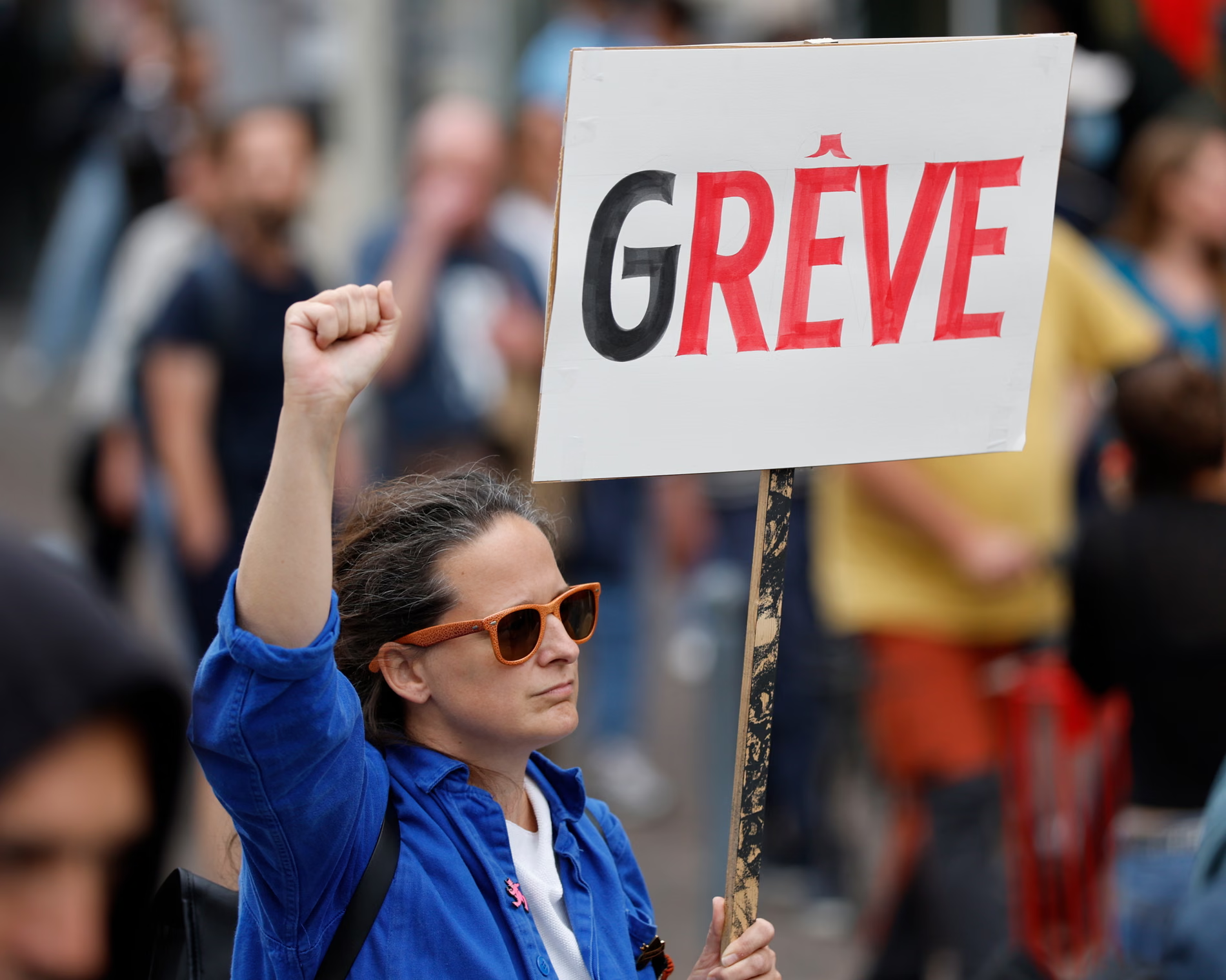
France is preparing for one of its largest strike days in years as trade unions unite to challenge new Prime Minister Sébastien Lecornu over budget cuts, wages, pensions, and public services. Authorities expect around 800,000 people to join marches on Thursday, with up to 80,000 police deployed to maintain order. Early reports show bus depots blocked in Paris and northern regions, and several high schools in the east of the capital and Amiens have staged walkouts. Rail and air transport are facing widespread disruptions.
Trade unions have planned roughly 250 marches across France. This is likely the biggest demonstration since 2023, when thousands protested the government’s decision to raise the pension age to 64 without a parliamentary vote. Perrine Mohr from the moderate CFDT union in Hauts-de-France told local radio that citizens want a government more focused on workers and public welfare. She said recent policies have heavily favored businesses, and unions now demand stronger protections for workers and citizens.
The strikes come amid political instability. President Macron recently appointed Lecornu as the third prime minister in a year after François Bayrou and Michel Barnier were removed following disagreements over the national budget. Lecornu, who previously served as defence minister, faces low popularity and skepticism from opposition parties despite pledges of a “profound break” from past politics. Bayrou lost a confidence vote on 8 September over a €44 billion budget cut plan. Lecornu has promised to drop the controversial proposal to remove two public holidays, but unions fear other austerity measures, including welfare freezes, may continue.
Lecornu has limited time to prepare a new budget and form a minority government. Without careful negotiations, opposition parties could trigger another no-confidence vote. Since Macron called snap elections in June 2024, parliament has remained divided among left, right, and centrist parties, causing repeated deadlocks. Lecornu has met opposition leaders to discuss the budget and future governance. Analysts suggest he may continue cooperation with Macron’s pro-business policies and traditional right-wing party, Les Républicains. However, winning at least a temporary understanding with the Socialist Party is critical to avoid immediate rejection of his government.
The Socialist Party met Lecornu and urged an end to harsh budget cuts. They want higher contributions from the wealthy and stronger policies to help citizens manage daily costs. However, party leaders expressed disappointment over the lack of concrete plans from the prime minister. Far-right National Rally leader Marine Le Pen also met Lecornu, warning that continuing the current policies could lead to his removal. The political pressure comes as France faces a budget deficit nearly double the EU’s 3% limit and debt equal to 114% of GDP.
Amid this unrest, Fitch Ratings downgraded France’s credit rating, citing concerns over political instability and the government’s ability to manage finances. The strikes and looming budget negotiations put further pressure on Lecornu’s new administration to act quickly and balance public demands with economic realities. As protests unfold, the nation watches closely to see whether Lecornu can stabilize his government, address citizens’ concerns, and prevent further economic and political turmoil.
