

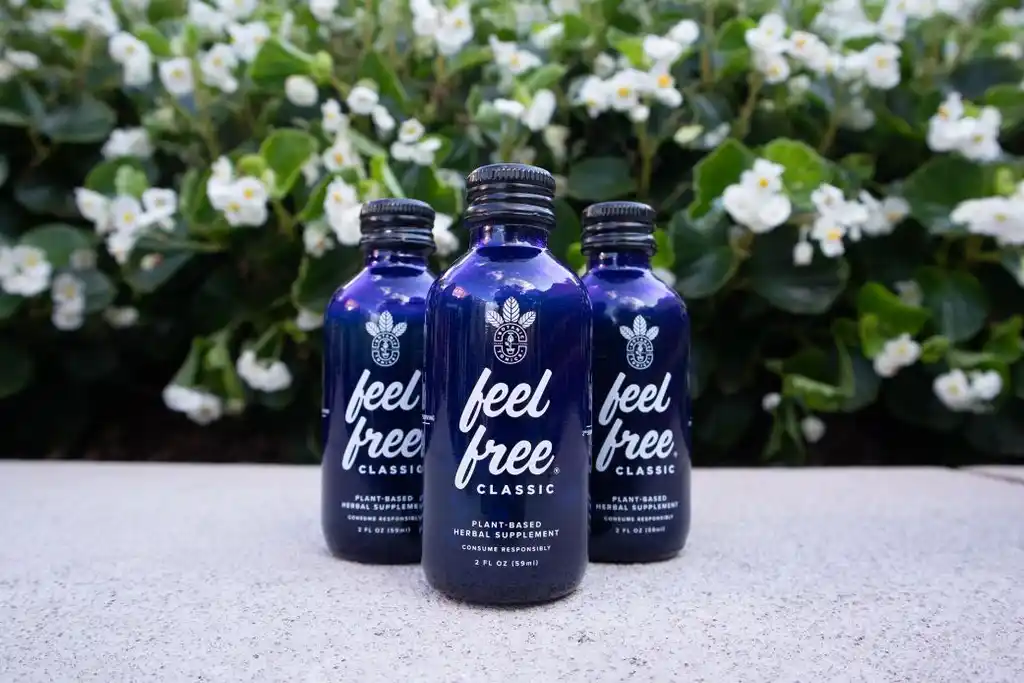
Jasmin Adeoyi faced an unexpected struggle. She found herself constantly driving to gas stations to buy Feel Free Classic, a popular herbal drink promoted for relaxation, focus, and enhanced performance. What began as casual use turned into a costly dependency, leaving her thousands of dollars in debt, affecting her health, and straining personal relationships.
Feel Free Classic, created by Botanic Tonics five years ago, is sold in two-ounce bottles, with half a bottle considered a serving. The recommended limit is one bottle per 24 hours. Despite these guidelines, users increasingly report withdrawal symptoms and growing dependence. The drink is available nationwide at over 24,000 gas stations, convenience stores, supermarkets, and health food outlets.
The company became a defendant in a class-action lawsuit in 2024. While a settlement was reached, Botanic Tonics did not admit fault. Labels were updated to better communicate potential risks, but the company continues to assert that the drink is safe for use.
Adeoyi recalls her first exposure to the product through a well-known podcast, which described it as a coffee-based alternative to alcohol. Advertisers claimed it would improve mood, creativity, and sociability. She described the initial effects as a surge in energy and a newfound interest in activities she usually ignored.
Feel Free Classic contains two key ingredients: kava and kratom. Kava comes from the root of the Piper methysticum plant, native to the Pacific Islands. It is known for mild euphoria and calming effects, but prolonged use may lead to physical tolerance and withdrawal symptoms. Kratom, derived from the Mitragyna speciosa leaf, has stimulant and sedative properties. While sometimes used as an alternative to opioids, scientific evidence on safety and efficacy is limited. Kratom is banned or regulated in several U.S. states and has historically been used in Southeast Asia as an opium substitute. Experts note that combining kava and kratom may increase the risk of dependence, although research is inconclusive. Users are advised to follow labeling instructions carefully and consult medical professionals if they experience dependence symptoms.
In 2016, the DEA considered classifying kratom as a Schedule I substance. The FDA followed in 2018 by designating it as an opioid. In May 2023, U.S. Marshals seized roughly 250,000 bottles of Feel Free Classic during a safety investigation. Botanic Tonics disputed the classification. By September 2024, the company agreed to an $8.75 million settlement in a class-action lawsuit. Labeling was updated to highlight addiction risks, set a minimum purchase age of 21, and provide clearer usage instructions. Botanic Tonics emphasized that the natural levels of 7-hydroxymitragynine in their product are minimal compared with concentrated synthetic forms.
Retailers also play a role in product safety. Many monitor customers for signs of dependence and suggest kratom-free alternatives. Experts stress that consumers should read labels carefully and watch for warning signs of misuse.
Adeoyi credits her recovery to prayer, community support, and conversations with individuals who faced similar challenges. She and her husband have managed to pay off much of the debt accumulated during her dependency. “I am so grateful for this,” she said, reflecting on the journey that helped restore both financial stability and relationships. She emphasizes the importance of awareness, responsible consumption, and the need for support systems when using products containing kava and kratom.
