

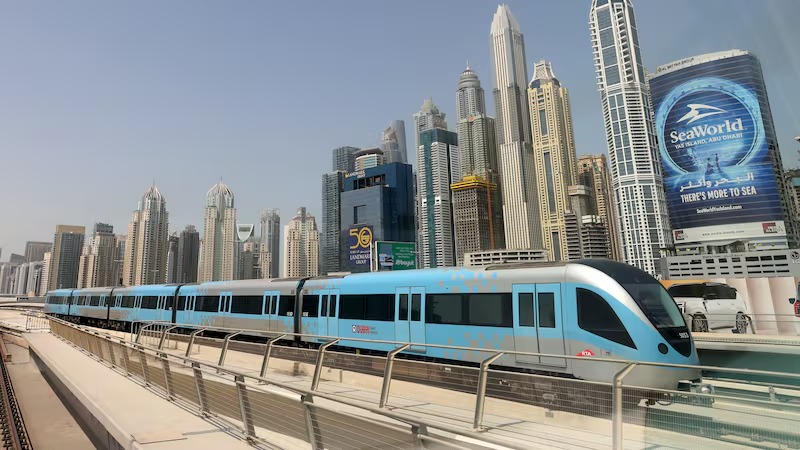
Dubai’s population has surpassed four million, presenting a major challenge for the city’s transport system. With roads often congested, authorities are working to ensure that residents have efficient ways to move around. The city is expanding its Metro network through the Blue Line megaproject, upgrading bus routes, and developing the Etihad Rail network. Taxis, bikes, and e-scooters are increasingly popular, but private cars remain the main choice for many residents.
Experts say high-density development, better public transport links, subsidized bus passes, and a cultural shift away from car dependence are essential to make Dubai’s transport system more efficient. The city’s population is expected to grow further, potentially reaching 5.8 million by 2040. Monica Menendez, a professor of civil and urban engineering at New York University Abu Dhabi, noted that many cities worldwide face similar challenges. She emphasized that solutions should focus on providing alternatives to cars, such as the Metro, ride-sharing, and “micro-mobility” systems like e-scooters.
For these alternatives to succeed, they must match or exceed the convenience, speed, and comfort of private vehicles. Menendez explained that this requires a cultural change, which can take time, but examples from European and Asian cities show it is achievable. She added that there is no single solution, and successful transport systems often include high-frequency services, dense networks, integrated payment methods, real-time updates, safe and clean vehicles, convenient transfers, and reliable operations. Advances in technology make implementing these strategies more feasible than ever.
Urban planners in Dubai are considering the 20-minute city model, where residents can meet most daily needs within 20 minutes without a car. However, sprawling residential areas and hot summer temperatures present challenges. Paulo Anciaes, a transport and health researcher at University College London, said that investment in shaded walkways and public spaces is crucial. Without this, proximity does not translate into usability. Singapore, for instance, has encouraged walking by building air-conditioned walkways and sheltered bus stops to counter hot weather. Short bus trips could play a key role in developing the 20-minute city. Yet, Dubai’s entrenched car culture and limited bus coverage mean behavioral incentives, such as subsidized bus passes, are needed to boost ridership. Menendez also stressed the importance of mixed-use developments, where people can live, work, and shop in the same area. This urban design makes walking, cycling, or using public transport more practical and supports a more sustainable, connected city.
Dubai is making major investments in public transport. The Metro Blue Line project, set to begin operations in 2029, will serve expanding neighborhoods like Mirdif and Dubai Creek Harbour, including a station linking International City to Dragon Mart. An Etihad Rail station is planned near Jumeirah Golf Estates, with connections to other public transport. A high-speed rail link between Abu Dhabi and Dubai is also under consideration. Authorities are upgrading the bus network, adding cycle paths, and creating shaded areas to improve walkability. Plans include more than 3,000km of new paths and 110 bridges and tunnels to make Dubai a year-round pedestrian-friendly city. Transport expert Martin Tillman said no single mode can meet all travel needs. Integration across transport types—including demand-responsive services, park-and-ride options, and first- and last-mile connections—will be essential to accommodate growing demand from new residents.
Despite public transport improvements, roads remain busy. Toll systems, such as Dubai’s Salik, aim to encourage alternative transport modes. Road safety campaigner Thomas Edelmann highlighted a survey showing 91% of residents face daily traffic congestion, and nearly half report stress or anxiety from driving conditions. Survey respondents suggested solutions including work-from-home options, expanded rail services, road network improvements, and enhanced bus systems. Edelmann emphasized that reducing reliance on cars is crucial to ease congestion and make Dubai’s transport system safer and more efficient. As Dubai’s population continues to rise, combining infrastructure upgrades, cultural changes, and urban planning strategies will be key to ensuring residents have multiple, convenient transport options.
