

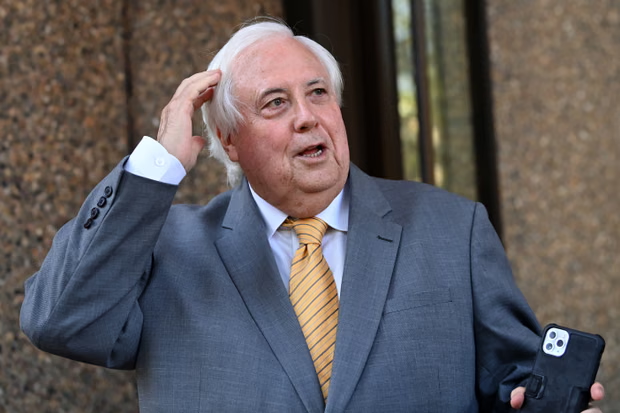
Australian mining magnate Clive Palmer has been ordered to pay $13.6 million after an international tribunal dismissed his claim of being a “foreign investor” in a mining project in Western Australia. The dispute lasted more than a decade and involved claims totaling almost $305 billion.
The permanent court of arbitration, set up under international treaties, rejected Palmer’s case because it had no jurisdiction over a dispute between an Australian citizen and the national government. Attorney General Michelle Rowland said Palmer was not a foreign investor and could not access benefits under Australia’s free trade and investment agreements. She added that Australia should never have had to spend over $13 million defending the claim.
Palmer’s Singaporean-owned investment company had sought nearly $200 billion in damages after a mining proposal in the Pilbara region was blocked. The case argued that Australia had breached the ASEAN-Australia-New Zealand free trade agreement. The Western Australian government faced scrutiny in 2020 for legislation preventing such damages, following an initial rejection in 2012. WA Attorney General Tony Buti said Palmer’s original claim could have bankrupted the state. He welcomed the tribunal’s decision, hoping it would end the saga.
Palmer described the legislation as “akin to the actions of a banana republic” in a notice of arbitration after the High Court rejected his challenge. The arbitration system, experts say, allows foreign investors to sue the state they invest in outside national courts. Jonathan Bonnitcha, a law associate professor at UNSW, described it as a method to internationalize disputes. Tribunals are typically formed with two arbitrators nominated by the claimant and respondent, who then select a third.
The Australian government has moved to exclude this arbitration process from future trade agreements, in line with international trends. Other cases by Palmer may also be affected if future tribunals adopt the same legal stance, although precedents are not binding.
In addition to being one of Australia’s richest citizens, Palmer is a prominent political figure. He has led multiple parties and served as the federal MP for the Queensland seat of Fairfax. Ahead of the 2025 election, his Trumpet of Patriots campaign called for Australians to “wake up,” though none of the party’s candidates were elected.
The tribunal’s ruling, heard over three days in The Hague in September 2024, required Palmer to pay $13.6 million in legal costs. A spokesperson for Palmer said he would review the judgment. Patricia Ranald, convenor of the Australian Fair Trade and Investment Network, criticized Palmer’s claim, saying it exposed the flaws of the international-state dispute settlement system. She called it an “absurd” process that allows investors to exploit legal loopholes for extreme claims.
Ranald warned that while this claim was defeated, other foreign investors, particularly in fossil fuels, could attempt similar claims in the future. The tribunal’s decision marks a decisive setback for Palmer and highlights ongoing tensions over investment, sovereignty, and international legal mechanisms in Australia.
