

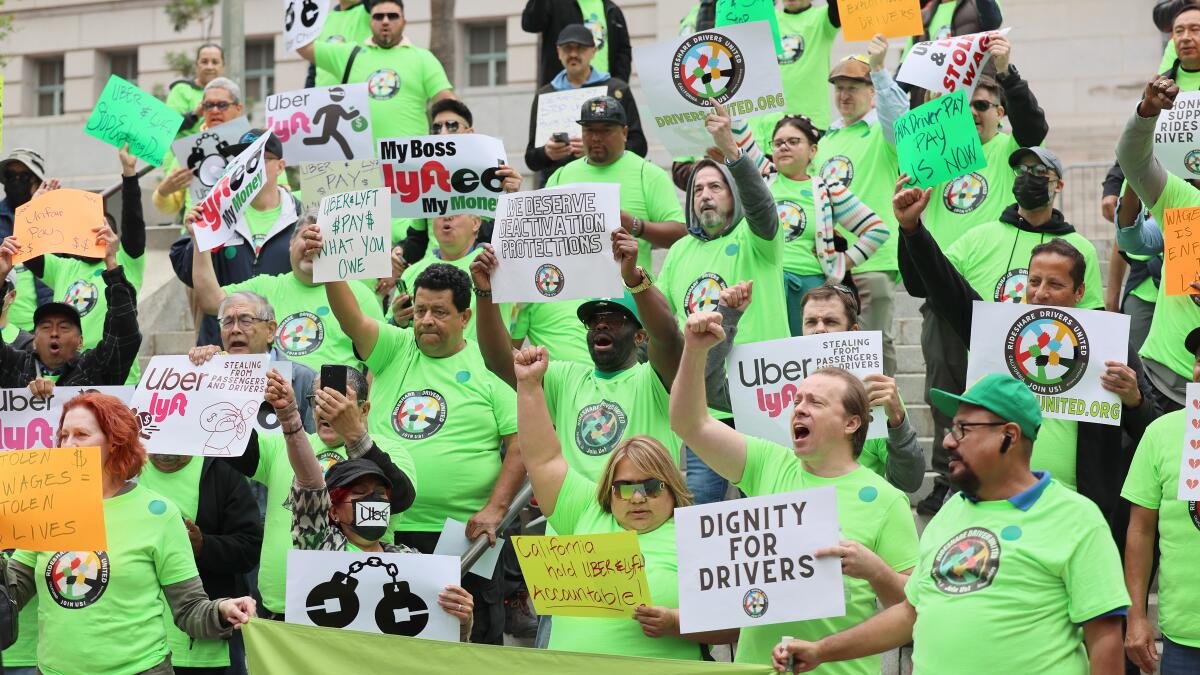
California has approved a landmark measure that expands labor rights for more than 800,000 rideshare drivers across the state. Governor Gavin Newsom signed the bill on Friday, giving drivers the right to form unions and bargain collectively for higher pay, improved working conditions, and better benefits.
Supporters call this the largest expansion of private-sector collective bargaining rights in California’s history. The measure is the product of a compromise between labor unions and the tech companies behind ride-hailing platforms such as Uber and Lyft.
California is now the second U.S. state to grant such rights. Massachusetts voters approved a referendum in November allowing drivers to unionize. Workers in Illinois and Minnesota are also pushing for similar rights, and advocates believe California’s new law will encourage them.
Governor Newsom described the law as a response to shrinking federal worker protections. He said California wants to prove that government can protect workers while also lowering costs for families.
The measure comes from a September agreement between Newsom, state lawmakers, the Service Employees International Union, and ride-hailing firms including Uber and Lyft. In exchange for union rights, the state passed another bill supported by the companies. That law lowers insurance coverage requirements for accidents caused by uninsured or underinsured drivers.
Lyft CEO David Risher said the change could save his company $200 million and help reduce fares for passengers. Uber has argued that high insurance costs explain why fares in California are more expensive than in other states. According to the companies, nearly one-third of every ride fare currently goes toward insurance.
The new law follows years of legal and political battles over the status of gig workers. In 2019, state lawmakers passed a law requiring ride-hailing firms to treat drivers as employees with benefits. Uber and Lyft strongly opposed it and funded Proposition 22, a ballot initiative that reversed the law in 2020. That campaign cost the companies over $200 million.
Unions and drivers opposed Proposition 22, saying it removed worker protections while boosting company profits. In 2023, the California Supreme Court ruled that Uber and Lyft could continue treating drivers as independent contractors. This meant they had no access to benefits like overtime, sick leave, or unemployment insurance.
The new law does not change drivers’ contractor status, but it gives them the ability to unionize and negotiate on critical issues such as pay, driver deactivations, and paid leave. The law does not extend to food delivery workers on platforms like DoorDash, though advocates view the measure as a major step forward for gig workers.
Labor leaders praised the development. Tia Orr, executive director of SEIU California, said it proves that valuing workers benefits everyone. She called the law a clear contrast to efforts at the national level to reduce worker protections.
Uber and Lyft also welcomed the compromise. Ramona Prieto, head of public policy for Uber in California, said the new measures show that industry, unions, and lawmakers can work together to create balanced solutions.
Still, some driver groups argue the law does not go far enough. Rideshare Drivers United, which represents 20,000 drivers in Los Angeles, said the measure lacks strong enforcement and does not require companies to share driver pay data. They pointed to New York City, where driver wages rose after officials required ride-hailing companies to release pay information.
Nicole Moore, president of Rideshare Drivers United, said state backing is necessary to ensure contracts are fair and driver pay improves over time.
The law comes as Uber and Lyft continue negotiating settlements with California and several cities, including San Francisco, Los Angeles, and San Diego. These lawsuits accuse the companies of withholding wages from drivers before Proposition 22 took effect.
The passage of the law highlights California’s role as a testing ground for the future of gig work. By granting union rights while keeping drivers classified as independent contractors, the state is testing a middle ground between worker protections and company flexibility.
Whether this model spreads to other states will depend on how effective it proves in California. For now, drivers have gained a new tool to push for better conditions, while ride-hailing companies expect lower insurance costs to reduce fares and attract passengers.
