

Australia’s agriculture, fisheries, and forestry industries are set to reach a record $101.6 billion in the 2025-26 financial year. This is $7.3 billion higher than last year, according to the latest forecast by the Australian Bureau of Agricultural and Resource Economics and Sciences (ABARES).
The rise comes despite extreme drought conditions and unpredictable global trade markets. High livestock prices are the main driver of this growth. ABARES executive director Jared Greenville said that prices for livestock and animal products like beef, lamb, and milk have recently been very high, pushing the sector’s value to record levels.
The drought has reduced livestock supply, lifting lamb and cattle prices at saleyards. Livestock production is expected to reach $41.6 billion this financial year, which contributes significantly to the overall agriculture value of $94.7 billion. In contrast, crop production faces challenges. Wheat production and its value are expected to fall slightly due to lower yields and global price pressure.
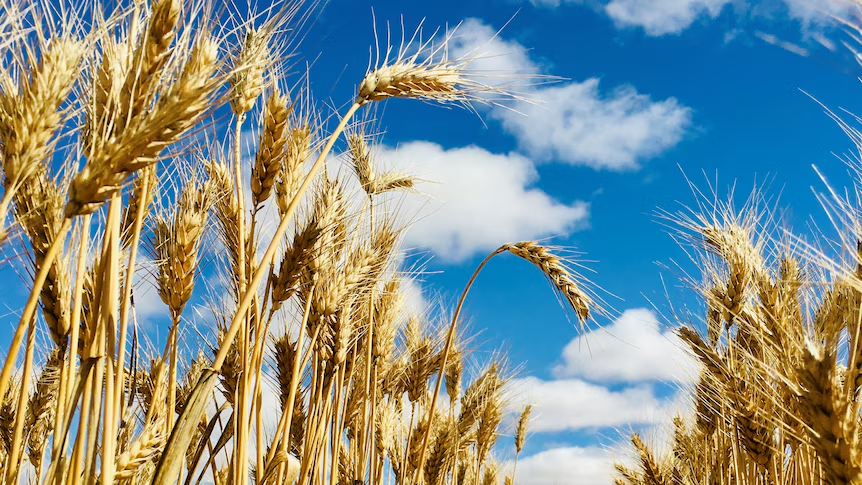
Winter rains have improved conditions for crops, and ABARES now predicts Australian crop production will reach around 62 million tonnes, a 12% increase from the June forecast. Wheat production is estimated at almost 34 million tonnes, remaining above the 10-year average. Barley and pulse crops are also rising, and stable canola production will help achieve the third-largest winter crop on record. Southern New South Wales is still a concern due to slow winter crop growth and low soil moisture.
Exports are forecast to fall slightly but remain well above average at $74.6 billion. Beef and sheep meat exports are expected to decline, but wheat and horticulture exports are likely to increase because of high carryover from 2024-25. Strong international demand continues from markets like China, Japan, and the United States.
In 2018, the National Farmers Federation set a goal for the agriculture industry to reach $100 billion by 2030. With agriculture alone forecast at $94.7 billion this year, NFF president David Jochinke says the goal is now “near reality.” He praised farmers for maintaining strong performance despite multiple challenges.
Farmers continue to face headwinds such as rising production costs, water policy issues, supply chain pressures, and infrastructure investments. Community debates over renewable energy and land use also affect operations. Jochinke emphasized the need to strengthen value chains, improve sustainability, and support innovation, skilled labour, and capital to grow Australian agriculture businesses.
The record forecast shows the resilience of Australia’s agriculture sector. High livestock prices and improved winter crop conditions have helped the industry navigate tough conditions while continuing to meet strong domestic and global demand.
