

The International Court of Justice (ICJ) has ordered Israel to allow humanitarian aid into Gaza, finding that the country’s restrictions over the past two years violated its international obligations.
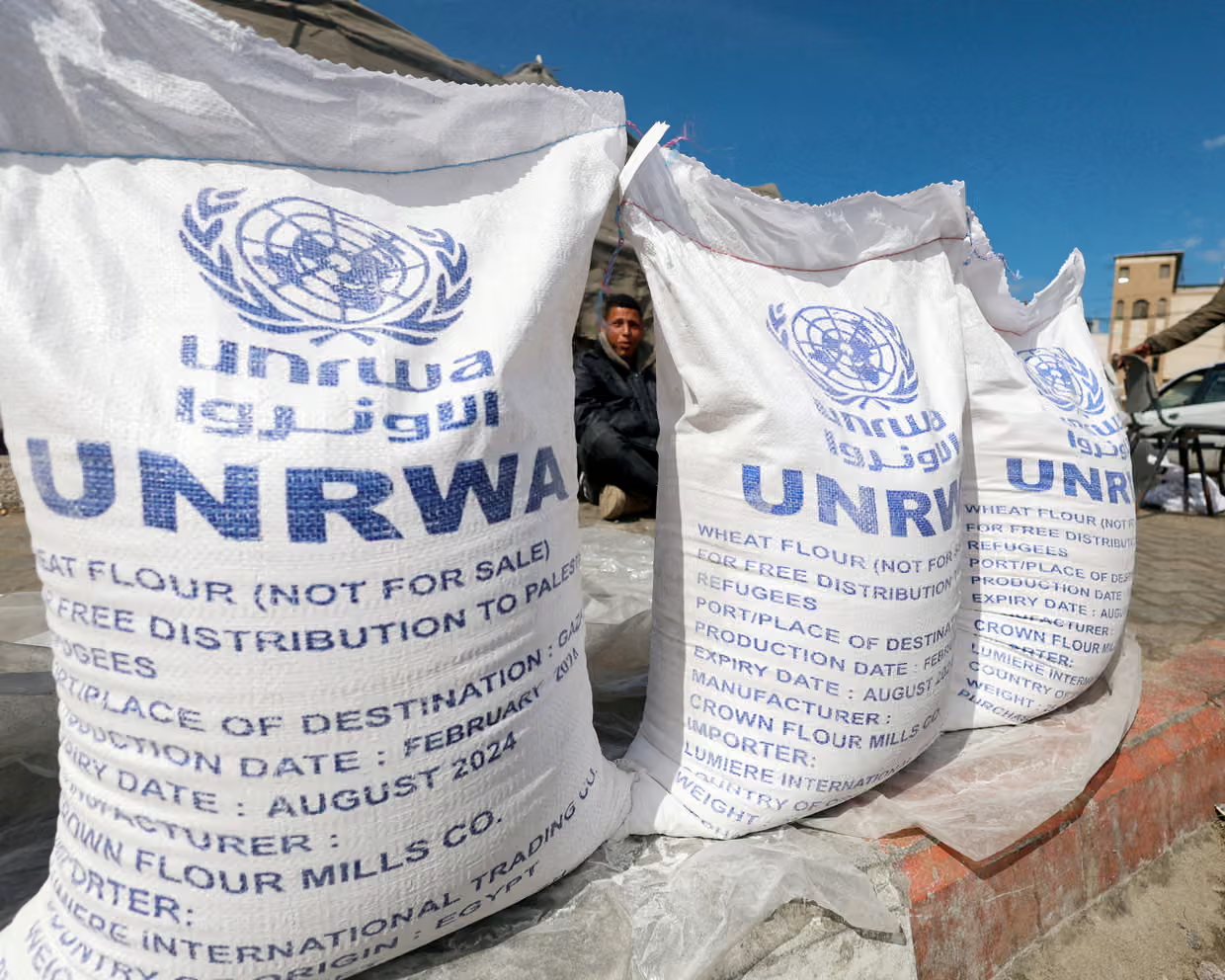
The ICJ said Israel must not impede the delivery of aid by UN organisations, including the UN Palestinian relief agency, UNRWA, which has been blocked from Gaza since January. Israel had claimed UNRWA was infiltrated by Hamas, but the court found no evidence to support this claim.
The court ruled that Israel’s restrictions violated its responsibilities under the Geneva Conventions and the UN Charter. It stressed that Israel, as an occupying power, cannot use starvation as a method of warfare and must ensure essential food reaches the civilian population.
More than 2,100 Palestinians were killed near aid distribution points, and parts of Gaza faced famine conditions by August. The court noted that the Gaza Humanitarian Foundation, set up by Israel, did not replace the need for UN and international aid.
The ICJ also emphasized that Israel must respect the immunities of UN staff, premises, and entities. Schools, hospitals, and other UNRWA facilities must be treated as inviolable. The court confirmed that Israel must allow the International Committee of the Red Cross access to Palestinian prisoners.
Although Israel has the right to inspect aid shipments, the ICJ said these inspections cannot prevent the regular and fair distribution of essential food and supplies. Security concerns do not justify a general suspension of aid.
Norway, which requested the ICJ opinion, said it will push for a UN General Assembly resolution based on the court’s findings. Andreas Kravik, Norway’s deputy foreign minister, said the ruling confirms the UN’s role in delivering life-saving aid and expects Israel to cooperate fully.
The World Health Organization also warned that aid reaching Gaza is still limited. Director Tedros Adhanom Ghebreyesus described conditions as catastrophic and predicted lasting health impacts for generations.
Israel rejected the ICJ’s advisory opinion. The country’s foreign ministry said it “fully upholds its obligations under international law.”
The ICJ ruling highlights Israel’s obligations as both an occupying power and a UN member. It requires the country to allow humanitarian aid, respect UN immunities, and ensure the safety and access of civilian populations in Gaza.
