

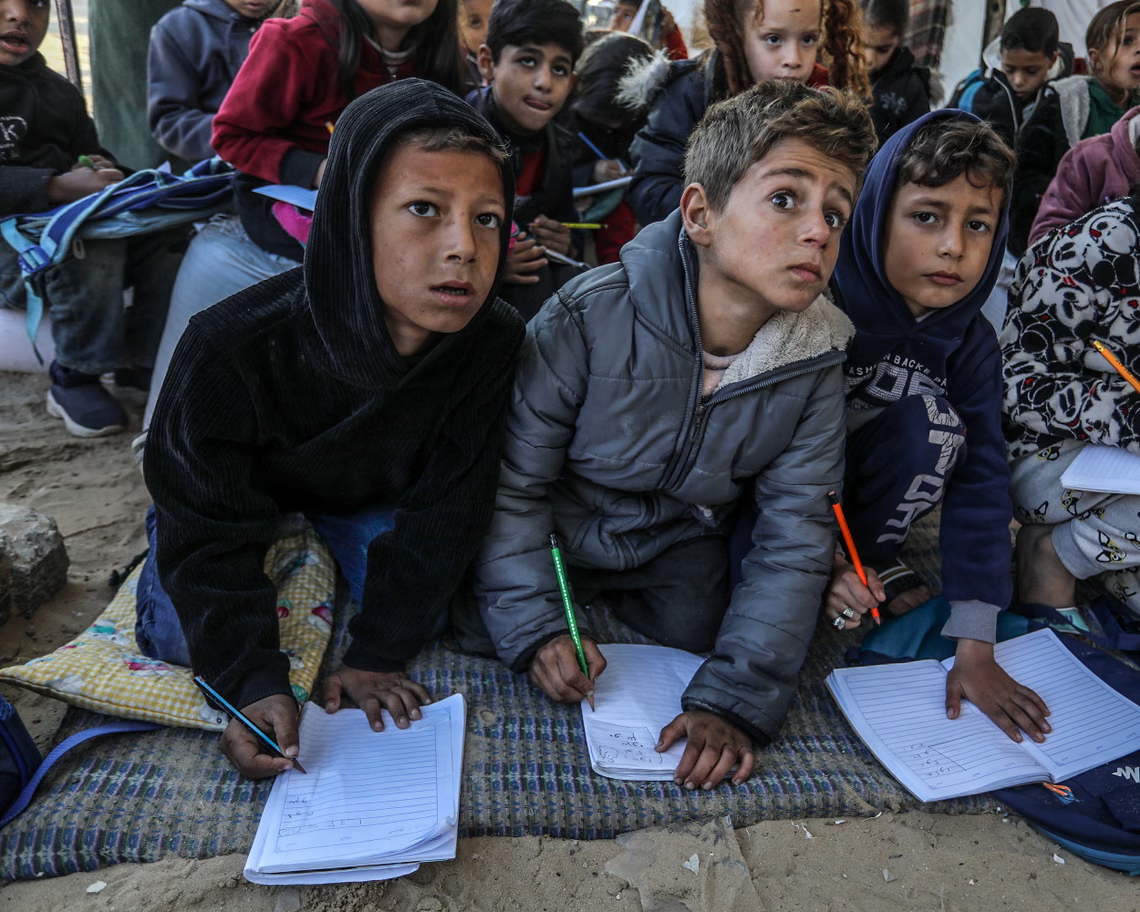
Two years have passed since children in Gaza last attended a regular school, as the ongoing conflict has left 97% of classrooms destroyed or damaged. More than 600,000 students are beginning their third year without formal education, while teachers and volunteers struggle to provide lessons in tents, shelters, and damaged buildings.
Twelve-year-old Juwayriya Adwan remembers her last day at Khawla Bint al-Azwar school in Khan Younis vividly. The morning of 7 October, air raid sirens filled the corridors, children held hands tightly, and teachers tried to calm the students amid panic. Her school was bombed shortly after, her books destroyed, and some classmates killed. “The hardest loss of all is education, because that is the loss of the future itself,” she said. Juwayriya now lives in a crowded shelter, sharing a tent with her family. Power is scarce, privacy is non-existent, and basic necessities are limited.
Despite the challenges, Juwayriya dreams of becoming a journalist to share the stories of Gaza’s children. She attends brief lessons online when possible or joins small teaching sessions organized by volunteers. “Even in these moments, I feel alive,” she said. “I remember who I was: the girl who loved numbers and poems, who believed learning could change the world.”
Teachers in Gaza have also been profoundly affected. Naglaa Weshah, a 40-year-old educator in al-Bureij camp, described the loss of her school, which once served nearly 240 students across six classes. Her classroom, a space filled with play, art, and interactive learning, was destroyed in the bombing. Many of her students have died, and those who remain face hunger, displacement, and trauma. Despite the dangers, she continues to teach whenever and wherever possible, keeping the connection alive with students who can reach her online. “Through learning, we say: ‘We are still here,’” she said.
Nine-year-old Sarah al-Sharif from Gaza City recalls sitting in her classroom when the first explosion shook the school. Her home and school were destroyed, and she lost her teacher and many classmates. Now living in a shelter, Sarah struggles to concentrate on learning, though she tries to study online when electricity and internet access are available. “I miss feeling normal,” she said. “I am too young to be a survivor of genocide; I want to be remembered for my dreams, not the war.”
Seven-year-old Ismail Muneifah fled Gaza with his family after his kindergarten was destroyed. His memories of bright walls, toys, and songs in class contrast sharply with the uncertainty of life as a refugee in Cairo. He has yet to attend formal schooling but hopes to join an informal school for Syrian refugees, offering a few hours of education each day. “For the first time in two years, I feel hope,” he said.
Across Gaza, teachers, volunteers, and non-profits continue to work against the odds. Education has become a form of resilience, giving children and families a sense of normalcy and a way to claim their future. Despite the destruction of schools and the trauma endured, the determination to learn and teach remains strong.
The stories of Juwayriya, Sarah, and Ismail illustrate the broader crisis affecting Gaza’s children. Education is not only a right but a crucial part of survival, providing hope and preserving the possibility of a future beyond the rubble. Families and educators continue to plead for international support, urging the world to recognize that protecting education is essential to protecting life itself.
