

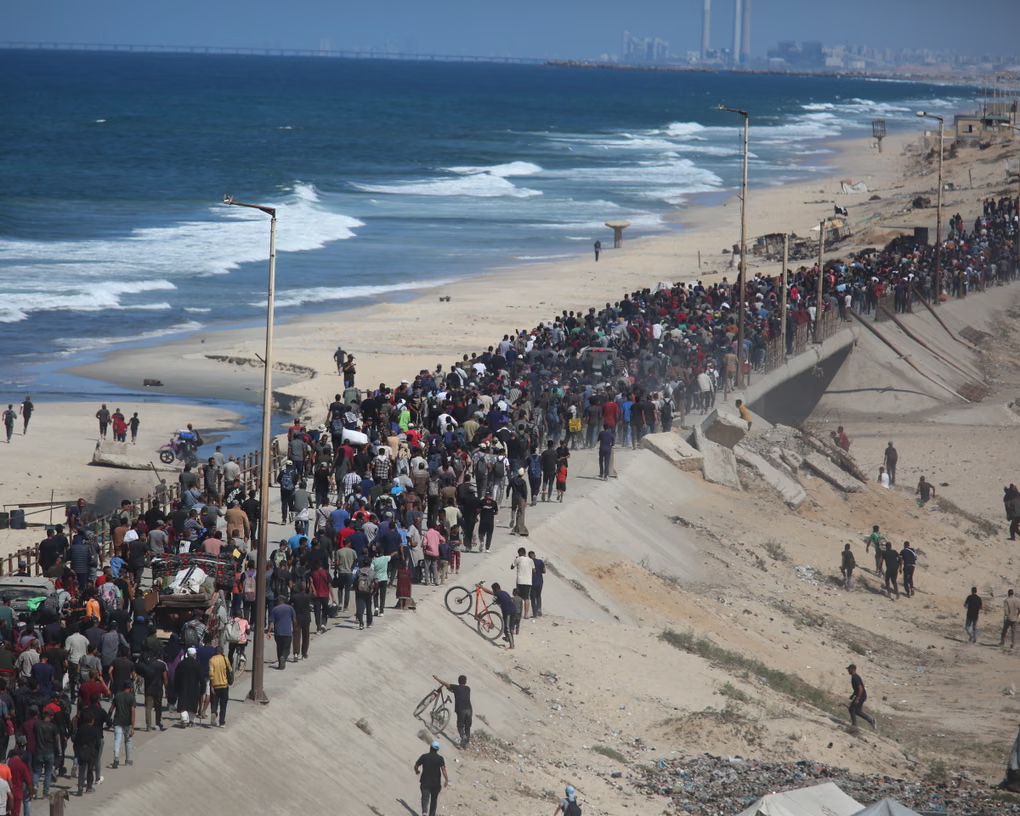
Tens of thousands of displaced Palestinians in Gaza have begun returning to their homes after a ceasefire between Hamas and Israel came into effect on Friday. The truce, first in six months, brought relief to residents of the war-torn territory who have endured relentless violence since March.
Israeli troops withdrew to newly agreed positions in the early hours of Friday, while Hamas is expected to release 20 living Israeli hostages early next week. In return, Israel will free 250 Palestinians serving long-term sentences and 1,700 others detained during the conflict. The agreement forms the first phase of a US-drafted peace plan announced last week by former President Donald Trump.
Israeli Prime Minister Benjamin Netanyahu claimed credit for the progress, emphasizing that “the security of Israel” guided his decisions in Gaza. He warned that while the ceasefire holds, Israel will act if Hamas resists further demilitarization efforts. “Hamas will be disarmed and Gaza will be demilitarised… If not, it will be achieved the hard way,” Netanyahu said.
Hamas leaders, however, expressed scepticism about disarmament. Basel Naim, a senior Hamas figure, said the group’s weapons would only be handed over to a Palestinian state and that fighters could join a national army. A joint statement from Hamas, Islamic Jihad, and the Popular Front for the Liberation of Palestine rejected any “foreign guardianship” over Gaza while welcoming international aid for reconstruction.
Under the ceasefire, Israeli forces will initially control 53% of Gaza before the hostages are released. Despite heavy bombardment earlier Friday, Israeli troops were seen pulling back from areas such as eastern Khan Younis, southern Gaza, and Nuseirat camp in central Gaza.
Following the announcement, thousands of Palestinians began walking north toward Gaza City, eager to assess damage and recover belongings. Nearly half a million residents in northern Gaza had been displaced by the Israeli advance, and many faced long journeys on foot. In southern Gaza, families from the coastal al-Mawasi strip headed inland toward partially ruined Khan Younis.
Many residents described widespread destruction. Ahmed al-Brim, pushing a bicycle loaded with wood, said, “We went to our area – it was exterminated. We don’t know where we will go after that.” Muhannad al-Shawaf reported that streets that once took minutes to traverse now took over an hour due to rubble. Experts estimate over 90% of homes in Gaza have been damaged or destroyed, and critical infrastructure has collapsed. Malnutrition is widespread, and famine is affecting parts of the territory.
The ceasefire is intended to allow a surge of humanitarian and medical aid into Gaza through all five crossings from Israel. Israeli authorities said they would allow 600 aid trucks daily, though aid organizations argue that this is far below the required levels. UN agencies and organizations like Care International continue to wait for clear guidance on delivery logistics, emphasizing the urgent need to address famine and malnutrition.
The conflict has claimed more than 67,000 lives, mostly civilians, with many more bodies trapped under rubble. Medical teams plan to use the ceasefire to recover remains and continue critical healthcare services. Israel’s offensive began in October 2023 following a Hamas attack that killed about 1,200 people and took 251 hostages.
Despite the temporary relief, uncertainties remain. The US peace proposal includes disarmament of Hamas, further Israeli withdrawals, the creation of an international stabilization force, and a technocratic Palestinian administration under international oversight. Hamas has resisted foreign involvement, particularly the proposed leadership of former UK Prime Minister Tony Blair.
The ceasefire represents the first pause in fighting in six months and offers Palestinians a chance to begin rebuilding their lives. However, significant challenges remain in reconstruction, humanitarian aid distribution, and political negotiations. The war has evolved into a regional conflict, affecting neighboring countries such as Iran, Yemen, and Lebanon, and reshaping the political landscape of the Middle East.
For Gaza’s displaced residents, the journey home is both hopeful and daunting. As families walk north along the damaged coastal road, they face the reality of destroyed neighborhoods, uncertain futures, and a humanitarian crisis that requires urgent international attention.
