

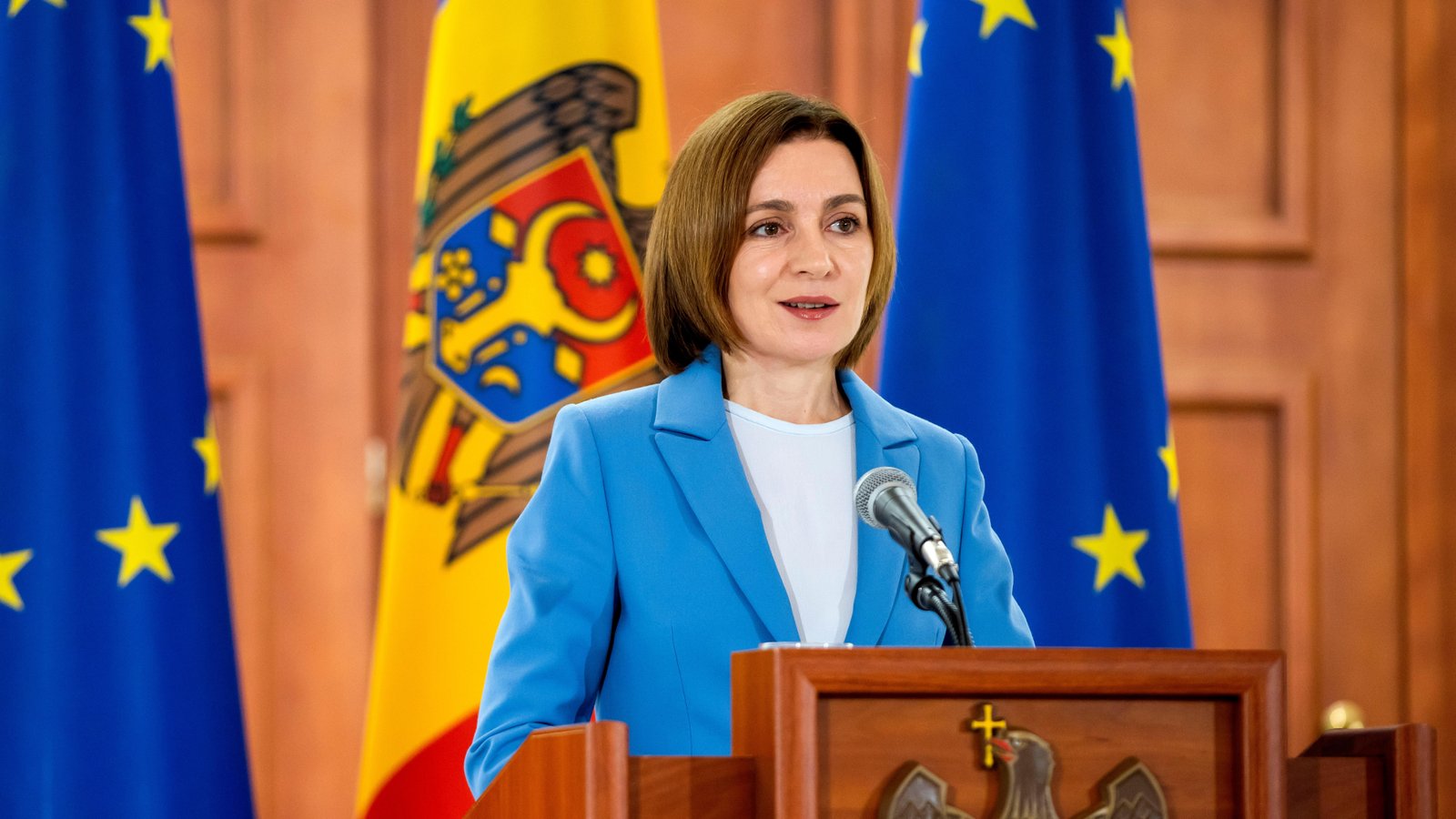
Moldova’s pro-European president, Maia Sandu, praised voters for resisting Russian influence after her party kept control in Sunday’s crucial election. The victory strengthens the country’s push to join the European Union and reduces Moscow’s sway over its politics.
“We did not allow ourselves to be bought, intimidated, or frightened,” Sandu said. “We defended our country through honest, democratic choice. This election shows we have capable institutions and determined people.”
With almost all ballots counted, Sandu’s Action and Solidarity Party (PAS) earned 50.03% of votes. This gives them 55 out of 101 seats in parliament. In comparison, a Moscow-leaning alliance led by former president Igor Dodon received 24.26% of votes. PAS’s performance exceeded pre-election polls, which predicted it might lose its majority. Analysts had warned that a smaller PAS presence could slow Sandu’s plan to achieve EU membership within ten years.
Sandu described the results as a “strong mandate” to pursue EU accession. The election is seen as a win for pro-European forces in Moldova, a country of 2.4 million people situated between Ukraine and Romania. Power in Moldova is split between a directly elected president and a prime minister chosen by parliament. Igor Grosu, PAS leader and Sandu ally, is expected to become prime minister.
European leaders welcomed the results. Ursula von der Leyen, president of the European Commission, praised Moldovans for choosing democracy and European values. French President Emmanuel Macron also congratulated the country, highlighting its sovereignty and pro-EU direction.
The campaign was marked by accusations of Russian interference. Authorities said Moscow provided funds to pro-Russian parties and ran propaganda campaigns to influence voters. Some pro-Russian parties were barred from the election for financing irregularities, angering Moscow. Election day saw reports of cyber-attacks on voting systems and false bomb threats at polling stations abroad. Sandu’s national adviser, Stanislav Secrieru, said Moldovans voted “under massive pressure from Russia and its proxies.” Bomb threats were reported in Brussels, Rome, and the United States. Moldova’s diaspora, which generally supports EU ties, played a significant role in securing PAS’s victory. The Kremlin criticized Moldova for limiting polling stations in Russia, claiming it restricted citizens’ voting rights.
Igor Dodon, leader of the pro-Russian Patriotic bloc, rejected the results, claiming electoral violations. His party and other opposition groups staged protests in the capital, Chișinău. Moscow continues to deny allegations of election interference, calling them “anti-Russian” and “unsubstantiated.” Western intelligence officials noted that Moldova had become a key focus for Russia after Ukraine. They said Moscow intensified efforts to support pro-Russian parties in recent months.
Since independence in 1991, Moldova has fluctuated between closer ties with Europe and maintaining Soviet-era connections with Moscow. Sandu, a former World Bank official, won the presidency in 2020 on an anti-corruption platform. Her government previously held a referendum to make EU membership a constitutional goal.
Despite the election success, Sandu faces major economic challenges. Inflation remains high, emigration continues, and GDP growth is modest. Experts say external factors, including Russia’s war in Ukraine, energy disruptions, and refugee inflows, have worsened economic conditions. PAS’s parliamentary victory gives Sandu a stronger platform to push for reforms, improve governance, and continue her pro-European course. Observers see this result as a clear signal that Moldovans prefer Europe over Russian influence.
