

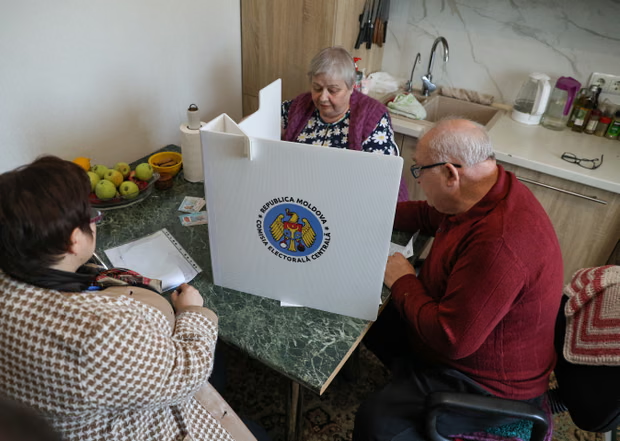
Moldova’s ruling pro-European Action and Solidarity Party (PAS) has retained its parliamentary majority after Sunday’s critical election, securing 50.03% of the vote with over 99.5% of ballots counted. The result strengthens President Maia Sandu’s pro-Western agenda, keeping Moldova on track for closer European Union ties and away from Moscow’s influence.
Sandu’s party outperformed pre-election surveys that predicted a reduced majority, a potential obstacle to her promise of EU membership within a decade. The main opposition, a pro-Russian alliance led by former president Igor Dodon, received 24.26% of the vote. Dodon has alleged electoral violations and called for peaceful protests outside parliament.
The vote came amid heightened tensions, with Moldovan officials reporting cyber-attacks on election systems and fake bomb threats at polling stations abroad. Sandu’s advisers said Russia had applied “massive pressure” on voters, though Moscow denies any interference. Moldova’s diaspora, traditionally pro-European, played a decisive role in the outcome.
Since gaining independence in 1991, Moldova has oscillated between Brussels and Moscow. Sandu, a former World Bank official, was re-elected president last year and has overseen a constitutional referendum enshrining EU membership as a national goal.
The election result is likely to be welcomed in Brussels and other European capitals, amid concerns that a pro-Russian government in Moldova could threaten European security. Sandu’s key challenges remain economic, including high inflation, modest GDP growth, and continued emigration, compounded by the fallout from Russia’s war in Ukraine.
PAS’s strength remains highest among young, urban voters and the diaspora, while regions with strong pro-Russian sentiment, such as Transnistria and Gagauzia, remain challenging for Sandu’s party.
