
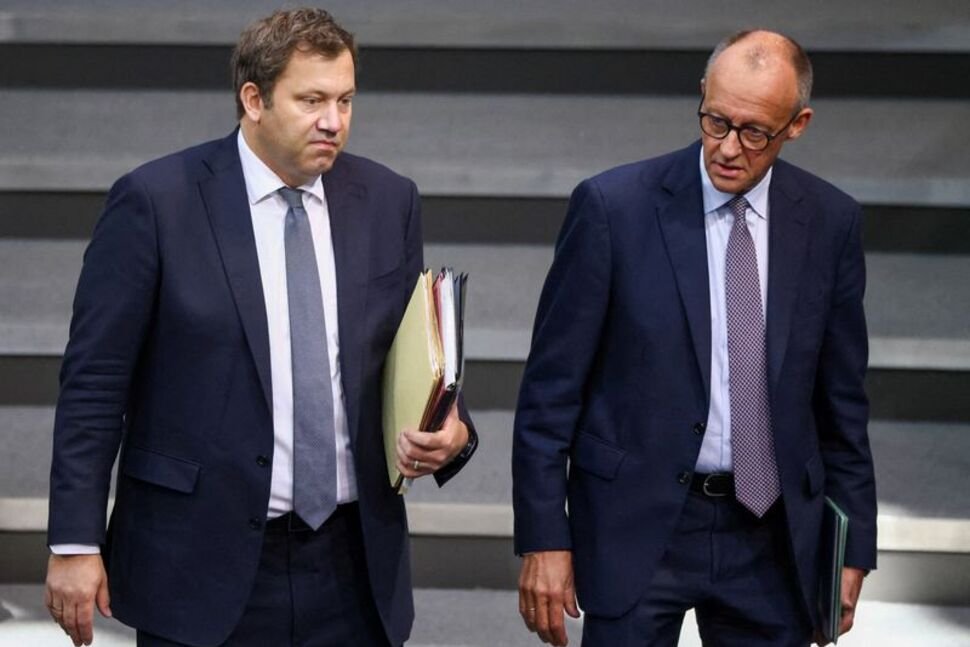
German Finance Minister Lars Klingbeil called on Wednesday for a modern EU budget focused on cross-border rail and road links, energy networks, border security, and research. He outlined a six-point plan to boost the European economy, urging a “Buy European” approach for critical components like advanced semiconductors and the creation of a single market for defence with joint armaments projects.
Speaking at the Hertie School in Berlin, Klingbeil said Europe faces a crucial moment. “Either we pull ourselves together and move Europe forward, or Europe risks losing further relevance,” he said. Under Chancellor Friedrich Merz, Germany, Europe’s largest economy, aims to play a stronger leadership role in the EU amid a less transatlantic-minded United States and the ongoing war in Ukraine.
Klingbeil criticized the current security posture, saying it is frustrating to see Europeans sidelined in decisions about the continent’s future. He called for the EU to take an active role in peace talks and strengthen its influence globally.
He also pushed for swift trade agreements with partners such as India and the Mercosur bloc in South America, responding to international tariff pressures. Klingbeil emphasized the need for a “Savings and Investment Union” to mobilize private capital and support start-ups and scale-ups, highlighting that a harmonized European capital market is key to economic growth.
Defending the status quo, Klingbeil said, will not suffice. “As in Germany, Europe too needs investment and reforms,” he added. He warned that national, go-it-alone approaches to EU single market rules create bureaucracy and fragment the economic space shared by the 27 member states.
To encourage labor mobility, Klingbeil called for better mutual recognition of professional qualifications across borders. He argued that “petty small-state mentalities” are the biggest obstacles to investment and economic progress.
By promoting joint defence projects, coordinated infrastructure investment, and a focus on European-made critical components, Klingbeil hopes the EU can strengthen its economy, secure its global role, and maintain relevance in a rapidly changing world.
