

Britain’s traditional puddings are facing a serious decline. Research from English Heritage shows that only 2% of households eat a daily homemade dessert, while a third never bake, boil, or steam one at all. Dr Andrew Hann, senior curator of history at the charity, warned that if the trend continues, British puddings could disappear within 50 years.
The decline raises questions about why these old-fashioned desserts are fading. Time, skill, and changing tastes may all play a role. Many classic puddings have simply fallen out of Britain’s collective memory. To explore the issue, an American writer attempted to make ten endangered British puddings at home, testing which recipes might be worth saving.
The first attempt, jam roly-poly, also known as shirt-sleeve pudding or dead man’s arm, proved challenging. Made with self-raising flour, butter, beef suet, sugar, and milk, the dough is flattened, filled with jam, rolled, wrapped in greaseproof paper and foil, then steamed. The result was disappointing: it did not rise properly, was raw in places, and was overwhelmingly sweet. Even family tasters struggled to find positives, though they noted the distinct taste of suet. Taste and ease both scored 1 out of 5.
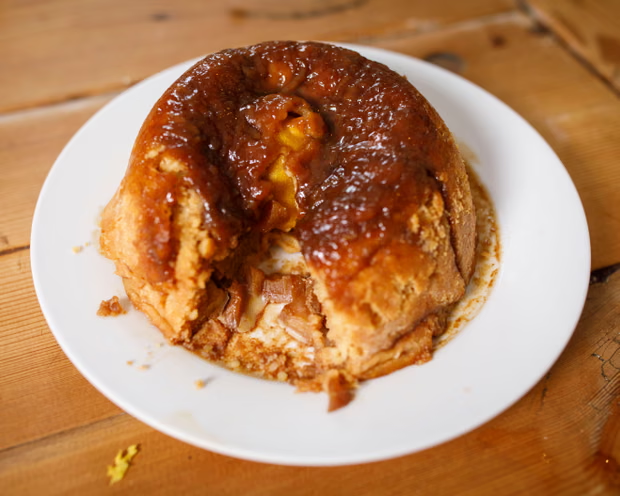
Sussex pond pudding, another classic, fared slightly better. Using apples, muscovado sugar, suet, and a whole lemon, the pudding requires a complex process of lining a pudding basin, assembling fruit and dough, and steaming for three and a half hours. While impressive in appearance, it was extremely heavy and stodgy, offering little advantage over simpler apple desserts. Taste and ease were rated 2 out of 5.
Bread and butter pudding, a more familiar recipe, relies on stale bread soaked with custard and baked. It was easier to make and more enjoyable to eat, though the process still emphasized the importance of timing and careful assembly. Many other endangered puddings feature similar challenges, relying on suet, long cooking times, and precise technique.
The decline of these traditional puddings is not only about taste but also cultural memory. Recipes that once connected generations are now disappearing from kitchens, with younger households unfamiliar with the preparation and tradition. The writer’s experiments highlighted that many puddings are time-consuming, heavy, or unappealing to modern palates, which may explain their fading popularity.
Despite the challenges, some puddings retain unique historical value. They showcase British culinary heritage and reflect centuries-old cooking methods. Advocates for preserving these recipes argue that documenting, teaching, and simplifying preparation could keep the tradition alive. Others suggest that the sheer complexity and richness of these desserts may limit their appeal to contemporary cooks.
The risk of extinction for British puddings underscores a broader cultural shift. As fewer households engage in daily baking, traditional recipes are being replaced by convenience foods and international desserts. Preserving endangered British puddings will require effort, awareness, and perhaps adaptation to modern kitchens and tastes.
The experiments demonstrate both the charm and difficulty of these historic desserts. Some may deserve rescue for their cultural significance, while others may naturally fade. Regardless, the conversation about endangered British puddings highlights the importance of maintaining culinary heritage in an era of fast, simplified cooking.
