

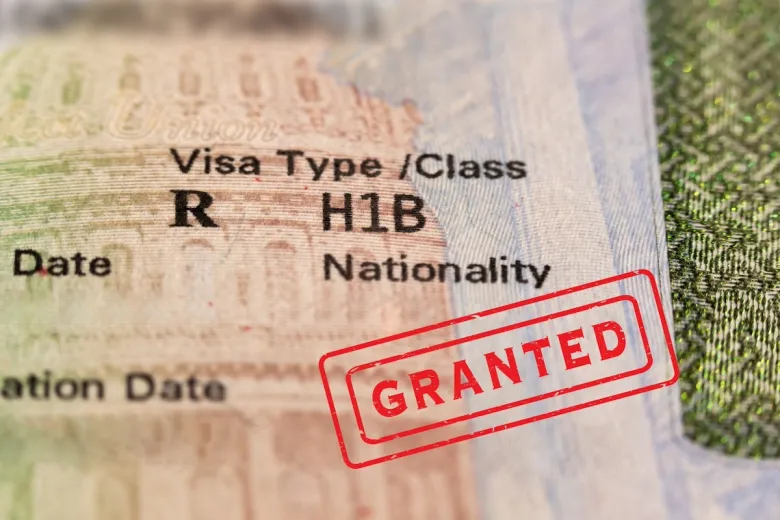
President Trump’s decision to impose a $100,000 annual fee on new H-1B visa applicants marks more than just a shift in immigration policy—it could be a strategic misstep that accelerates America’s decline in the global race for talent while unintentionally benefiting China.
Asian professionals, particularly from India, make up the vast majority of H-1B visa holders, meaning they are the primary audience affected by this policy. The $100,000 fee—unprecedented worldwide and roughly 25 to 30 times higher than visa costs in Canada or the UK—creates a stark two-tier system. Large corporations may absorb the cost, but startups and mid-sized firms risk being priced out entirely.
This approach consolidates global hiring power among tech giants, paradoxically weakening the innovation ecosystem that originally made the U.S. an attractive destination for international engineers and entrepreneurs. By making it harder for smaller companies to recruit top talent, the policy could stifle the very creativity and entrepreneurship America relies on to stay competitive.
The immediate fallout has been chaotic. Major employers issued urgent “return to America” advisories to overseas employees, underscoring the disruption this new fee could cause for established professional networks across Silicon Valley, Wall Street, and other innovation hubs.
For the roughly 500,000 current H-1B holders—again, largely Asian—the message is clear: leaving the U.S. may mean never returning at a reasonable cost. In effect, America risks sending the world’s top talent into the waiting arms of other countries, particularly China, which has cultivated an increasingly welcoming environment for skilled professionals.
The U.S. once led the global talent race by offering opportunity, mobility, and a relatively affordable path to employment for top international professionals. Today, policies like the $100,000 H-1B fee threaten to erode that advantage, potentially ceding ground to countries eager to attract the very workforce America seeks to retain.
