

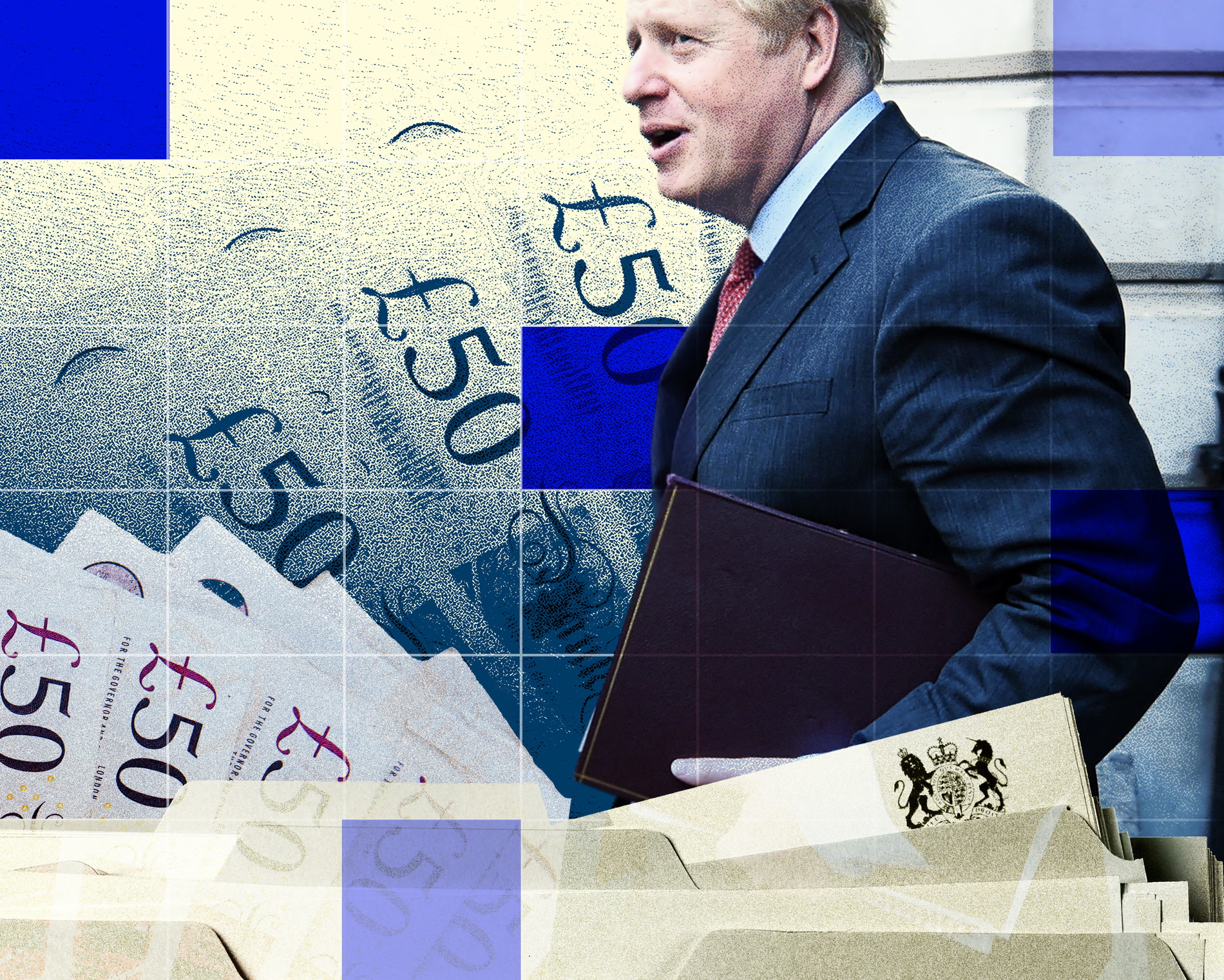
The Boris Files are a collection of leaked documents from Boris Johnson’s private office. They shed light on the former prime minister’s commercial activities after leaving Downing Street in September 2022. The files suggest Johnson is leveraging connections made while in office to advance personal financial interests. The leak raises serious questions about whether Johnson broke rules restricting post-ministerial work, breached the ministerial code, or misused public funds for private gain. Some documents date back to his time in office, revealing undisclosed meetings and possible Covid lockdown rule breaches. The data was first reviewed by a major UK media outlet, which carefully selected which portions to make public based on public interest considerations.
Johnson’s office operates as a limited company, funded through the public duty costs allowance (PDCA). This scheme allows former prime ministers to claim up to £115,000 annually for administrative and secretarial support, reflecting their continuing public duties. The leak, totaling roughly 2GB and 1,820 files, includes emails, letters, invoices, spreadsheets, speeches, and contracts. Most documents are from after September 2022, but some cover his tenure at Downing Street. The data was obtained by Distributed Denial of Secrets (DDoS), a US-based nonprofit focused on transparency. DDoS archives data leaks and only allows approved journalists or researchers to access sensitive files, unlike platforms that publish raw data publicly.
Johnson uses PDCA funds to pay for three full-time staff in his private office. The leaked documents suggest all three were involved in commercial activities, raising questions about whether public money may have indirectly supported private gain. A senior government source confirmed the PDCA contributions were used for staff salaries. Johnson did not respond to repeated requests for comment on these findings.
The PDCA was introduced during Margaret Thatcher’s era to assist former prime ministers with public duties after leaving office. The allowance was never intended to subsidize private profit-making. Other former leaders, including John Major, Tony Blair, Gordon Brown, David Cameron, Theresa May, and even Liz Truss, have claimed PDCA funds for their private offices. Oversight of PDCA spending is limited, making the Boris Files a focal point for calls for greater transparency. While previous leaders have faced scrutiny for post-office financial activities, there is no evidence others used their private offices for business development to the extent suggested by these files.
Former leaders like Tony Blair and David Cameron faced criticism for consultancy work or lobbying, but there were no claims their private offices directly facilitated business deals. Last year, the Information Commissioner’s Office (ICO) ruled that public interest outweighs personal privacy in matters involving state-subsidized private offices. The ICO decision emphasized that staff in these offices should have “different expectations” about what is disclosed, given the public funding involved. The publication of the Boris Files follows similar reasoning, highlighting the need for accountability when ex-prime ministers use public resources.
Johnson is not a private citizen in the usual sense. As a recently departed prime minister, his activities remain of public concern, particularly when they involve taxpayer-funded resources. The Boris Files illustrate the potential for conflicts between public duties and personal financial gain, emphasizing the importance of scrutiny in a functioning democracy. By publishing these findings, journalists are holding power to account, ensuring that the public can evaluate the conduct of a former leader who continues to benefit from state resources. The Boris Files reinforce the need for clearer rules and transparency regarding post-office activities and the use of public funds by former prime ministers.
