

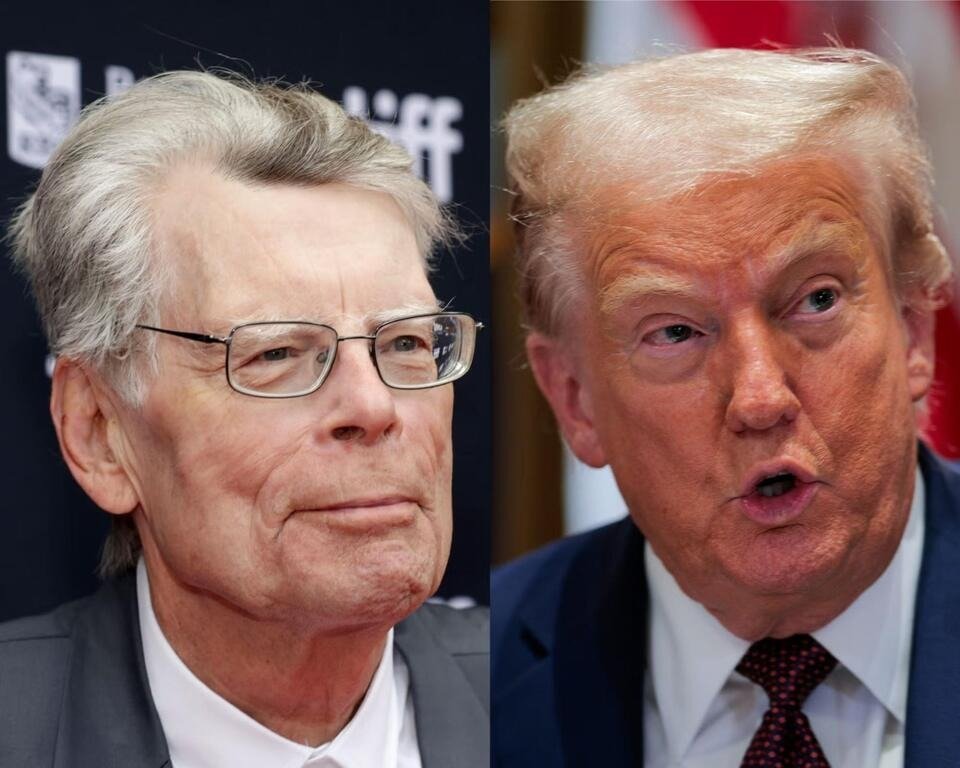
Stephen King, the famed author, has shared his views on how Donald Trump’s presidency might be remembered in history. Known for his outspoken criticism of Trump, King recently described the former president’s time in office as a “horror story.” He believes that decades from now, many Americans may deny ever supporting Trump.
King compared this to a famous baseball event. He referenced Bobby Thomson’s legendary 1951 home run, which clinched the National League pennant for the New York Giants. “There are tens of thousands of people who will say, ‘I saw [Thomson] hit that home run,’ even though only about 5,000 were actually there,” King explained. He suggested that Trump’s legacy might see the opposite effect. “Twenty or thirty years down the line, I think a lot of people are going to say, ‘Well, I never voted for Trump,’” King said.
The author acknowledged that he is aware some of his readers support Trump. However, he noted there has never been an organized boycott of his work. King said he feels a personal responsibility to speak out. His comments show that he sees writing and public commentary as tools for accountability and historical reflection.
King’s prediction touches on a broader theme: how public figures are remembered versus the reality of their impact. Historians often find that collective memory can shift over time. Events that seemed clear in the moment may be reinterpreted decades later. King believes Trump’s presidency could fall into this category, where public denial of support becomes a common narrative.
He also stressed that his critiques are not aimed at silencing discussion but rather highlighting what he sees as dangerous trends during Trump’s term. King’s comparison to Thomson’s baseball story emphasizes how memory can be distorted—sometimes exaggerating or downplaying actual events.
Political observers say King’s views reflect a common concern among critics of Trump: that history might not fully capture the controversial nature of his presidency. Public opinion can be fluid, and the way people recall their voting decisions is not always accurate. King’s prediction suggests that the memory of Trump’s presidency may become contentious and widely debated.
King’s commentary also reflects the role of authors and cultural figures in shaping political discourse. By speaking openly, he contributes to a broader discussion about leadership, accountability, and public memory. In his view, writing can serve as a record for future generations, even if the record is contested.
Experts in political science note that King’s forecast is not unprecedented. Many historical leaders have seen their legacies revised over time. Initial support or opposition can shift, influenced by later events and the narratives built by historians, journalists, and cultural figures. King seems to suggest that Trump may be remembered differently than how millions experienced his presidency firsthand.
This prediction aligns with King’s long history of commentary on politics and society. He has frequently used his platform to speak on issues beyond literature, blending cultural critique with social observation. His insight into Trump’s historical legacy highlights the ongoing debate about memory, truth, and accountability in American politics.
As time passes, public recollections of major political events often change. King believes Trump’s presidency will be subject to this phenomenon, with many people potentially denying their past support. Whether history will remember Trump as King predicts remains to be seen, but the author’s viewpoint offers a compelling lens through which to consider political legacy and cultural memory.
